Large-Format Wood-Look Tile: The Warmth of Wood with the Practicality of Ceramics
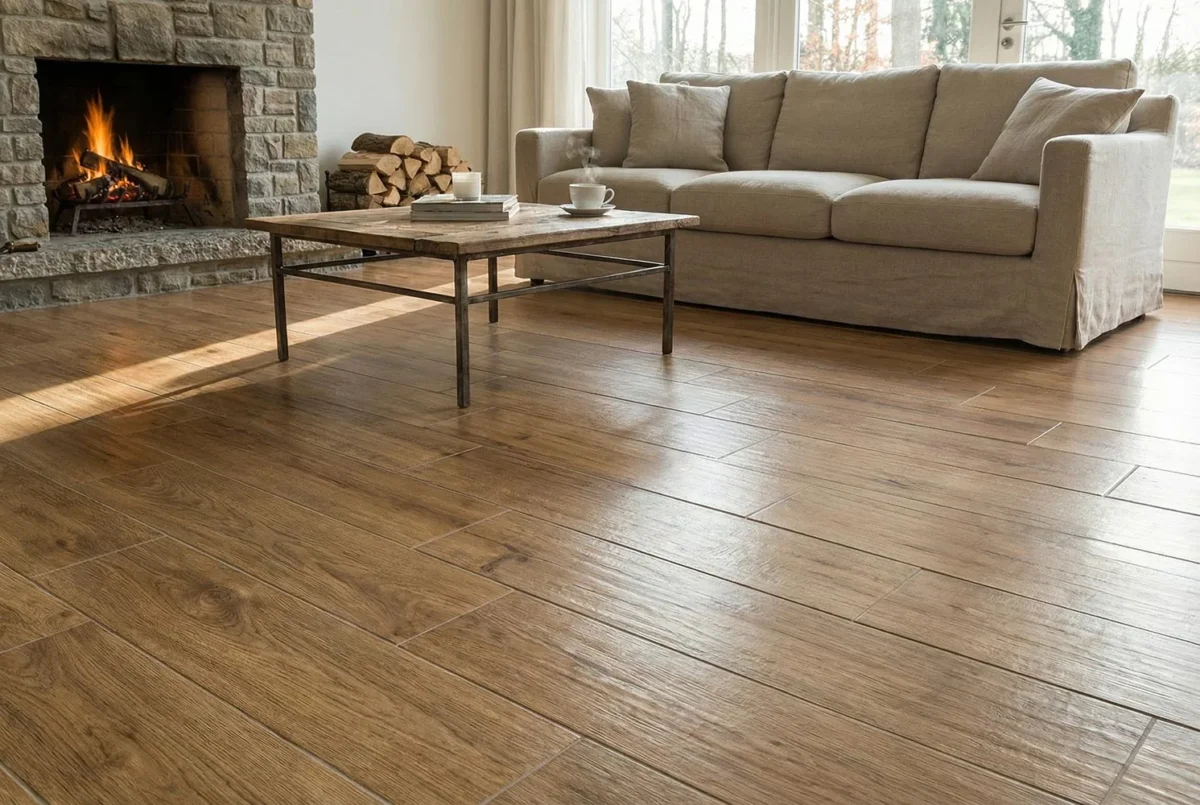
When you want wood but need practicality
Natural wood is one of the warmest and coziest materials in an interior. It creates a feeling of comfort, brings you closer to nature and never goes out of fashion. But wood has significant limitations: it fears moisture, needs regular care, and wears and scratches over time. What if you could get all the beauty of wood without its drawbacks? Large-format wood-look tile is exactly that solution.
M-STONE professionally lays large-format wood-look tile, creating a surface that is visually indistinguishable from natural parquet or planks but lasts for decades without special care.
Why wood-look tile is a sensible choice
Comparison with natural wood
| Characteristic | Natural wood | Wood-look tile |
|---|---|---|
| Moisture resistance | Low (it deforms) | Absolute |
| Wear resistance | Medium (scratches) | High |
| Care | Regular (varnishing, oil) | Minimal |
| Underfloor heating | Limited | Ideal |
| Bathroom | Not recommended | Ideal |
| The kitchen | Limited | Ideal |
| A terrace | Special species | No restrictions |
| Service life | 15-30 years (with restoration) | 50+ years |
| Eco-friendliness | A natural material | Needs no logging of forests |
Advantages of wood-look tile
Practicality
- Not afraid of water and moisture
- Does not deform with temperature changes
- Needs no sanding and varnishing
- Easy to wash with any products
- Leaves no marks from furniture
Durability
- Does not wear away from walking
- Does not fade in the sun
- Does not darken or yellow over time
- Keeps its original look for decades
Versatility
- Suitable for all rooms, including the bathroom
- Can be used with underfloor heating
- Suitable for outdoors (frost-resistant options)
- Goes with any interior style
Hygiene
- Does not absorb odours
- Is not a medium for bacteria and fungus
- Easy to disinfect
- A hypoallergenic surface
Wood-look tile formats
Classic formats (imitating parquet and planks)
20×120 cm
- Imitates a narrow parquet plank
- A classic look
- Many joints (less monolithic)
- Suitable for small rooms
20×180 cm
- Imitates a long plank
- An elegant elongated format
- Fewer joints along the length
30×120 cm
- Imitates a wide plank
- A modern look
- A popular format
30×180 cm
- A wide long plank
- A premium look
- For spacious rooms
Large formats
40×240 cm
- Imitates a massive plank
- A minimum of cross joints
- A modern luxurious look
30×300 cm
- An extra-long format
- Continuous lines
- For long corridors and large halls
50×300 cm
- The maximum wood-look format
- A monolithic look
- The effect of a real deck plank
Square formats (imitating parquet modules)
60×60 cm, 80×80 cm
- Imitates modular parquet
- A “herringbone” or “squares” pattern
- A classic look
Designs and textures
Imitated wood species
Oak The most popular imitation. An expressive texture with characteristic knots and veining.
Options:
- Natural oak (warm beige)
- Bleached oak (light, almost white)
- Grey oak (Scandinavian style)
- Bog oak (dark brown)
- Smoked oak (rich dark)
Walnut A noble dark wood with a refined pattern.
Characteristics:
- A rich brown colour
- Contrasting veining
- A luxurious look
Ash A light wood with a delicate pattern.
Characteristics:
- Light warm shades
- A soft texture
- Scandinavian style
Teak An exotic wood for special interiors.
Characteristics:
- A golden-brown colour
- A dense texture
- Associations with yachts and terraces
Wenge A dark African wood.
Characteristics:
- Very dark, almost black
- Contrasting light veining
- An exotic look
Olive A Mediterranean wood.
Characteristics:
- Warm beige-brown tones
- An expressive, unique pattern
- Every tile is unique
Pine A light wood with pronounced knots.
Characteristics:
- A light yellowish colour
- Many knots
- A rustic look
Types of surface finish
Natural
- A smooth surface with a light texture
- A universal option
- Ease of care
Brushed
- A texture imitating brush treatment
- A pronounced wood structure
- A tactile effect
Rustic
- Imitates aged wood
- Irregularities, traces of working
- A vintage effect
Sawn
- Saw marks
- An industrial look
- Loft style
Planed
- Perfectly smooth
- Modern minimalism
- An elegant look
Colour variations
Light
- Bleached oak
- Natural ash
- Scandinavian pine
- Birch
Medium (natural)
- Natural oak
- Honey oak
- Olive
- Teak
Dark
- Bog oak
- American walnut
- Wenge
- Ebony
Grey
- Grey oak
- Smoky oak
- Bleached grey oak
- Loft grey
Coloured (trendy)
- White (painted wood)
- Black (charred wood)
- Blue-grey (stained)
Ways of laying wood-look tile
Plank laying (Straight / Running Bond)
Description: the tiles are laid parallel to each other with an offset of 1/2 or 1/3 of the length.
1/2 offset (brick bond)
- Each row is offset by half a tile
- A classic symmetrical look
- Suitable for any room
1/3 offset
- Each row is offset by a third of a tile
- A more dynamic pattern
- A modern look
Random offset
- A random offset of varying size
- Imitates a real wooden floor
- The most natural look
Herringbone
Description: the tiles are laid at an angle of 45° or 90° to each other, forming a fishbone-like pattern.
Classic herringbone (45°)
- Tiles at 45° to the walls
- An elegant classic pattern
- Visually enlarges the space
Straight herringbone (90°)
- Tiles parallel and perpendicular to the walls
- A stricter look
- Easier to lay
Double (triple) herringbone
- Two or three tiles in each “tooth”
- A larger-scale pattern
- For large rooms
Chevron
Description: similar to herringbone, but the tiles are cut at an angle and meet in a clean line.
Characteristics
- More elegant than herringbone
- Needs special tile or trimming
- A premium look
Modular laying
Description: a combination of tiles of different sizes in a repeating pattern.
Options
- Squares + rectangles
- Different plank sizes
- Imitates modular parquet
Diagonal laying
Description: the tiles are laid at 45° to the walls.
Effect
- Visual enlargement of the space
- Dynamism
- More waste when cutting
Technology of laying wood-look tile
Features of laying long formats
The problem: long narrow tiles (20×120, 20×180 cm) tend to warp, becoming “bananas” or “propellers”.
The solution
Checking the geometry:
- Before laying, check every tile on a flat surface
- Reject clearly warped pieces
- The permissible deviation is up to 1 mm per metre
Preparing the base:
- A perfectly flat screed (a difference of up to 2 mm over 2 m)
- Thorough priming
- Using self-levelling compounds if needed
Applying the adhesive:
- Double application is mandatory!
- A notched trowel with a 10-12 mm tooth
- 100% coverage of the space under the tile
Levelling:
- A tile levelling system (TLS) is mandatory!
- More fixing points on long tiles
- At least 6-8 clips per 20×120 cm tile
Minimising the visibility of joints
Joint width
- Minimum: 1.5-2 mm
- Recommended: 2-3 mm
- Wood imitation allows wider joints (up to 4-5 mm), as between planks
Grout colour
- Matching the tile: the joints blend in
- Contrasting: emphasises the geometry
- Recommendation: grout 1-2 tones darker than the main colour of the tile
Laying direction
Along the light
- Tiles are laid perpendicular to the window
- The light emphasises the texture
- The classic approach
Along the long wall
- Visually lengthens the room
- Fewer cuts
- More economical
Along the short wall
- Visually widens the room
- More cuts
- For narrow rooms
Diagonally
- Visually enlarges the space
- The most waste (15-20%)
- Harder to lay
Using wood-look tile in different rooms
Living room and bedroom
Advantages
- The cozy look of wood
- The practicality of ceramics
- Compatible with underfloor heating
- Ease of care
Recommendations
- Large formats (30×180, 40×240 cm)
- Natural warm shades
- Plank or herringbone laying
- Matching grout
The kitchen
Advantages
- Water resistance (unlike parquet)
- Resistance to stains and grease
- Easy to wash
- Durability in a high-wear zone
Recommendations
- A matt or brushed surface (not slippery)
- Medium or dark shades (more practical)
- Epoxy grout for easy cleaning
Bathroom
Advantages
- The warmth of wood in a wet room
- Absolute water resistance
- Suitable for underfloor heating
- Creating a spa atmosphere
Recommendations
- A structured surface for slip resistance
- Dark tones of teak or walnut: an association with an exotic spa
- Or light oak: Scandinavian style
- Combined with stone-look tile
Corridor and hallway
Advantages
- High wear resistance
- Easy cleaning after coming in from the street
- A presentable look
- A visual continuation of the rooms
Recommendations
- Wear-resistant porcelain stoneware (PEI IV-V)
- Medium shades (more practical)
- A textured surface
- Laying along the corridor
Terrace and outdoors
Advantages
- The look of a wooden terrace without the upkeep
- Frost resistance
- Does not rot or turn grey
- Slip resistance
Recommendations
- Porcelain stoneware 20 mm thick
- A structured surface R11-R12
- Imitates teak or thermally treated wood
- Laying on supports or on adhesive
Commercial premises
Application
- Offices
- Clothing shops
- Cafés and restaurants
- Hotels
Recommendations
- PEI V wear resistance
- Large formats for fast laying
- Neutral colours (natural or grey oak)
Combining wood-look tile with other materials
Wood-look tile + stone-look tile
Zoning of spaces
- Kitchen (stone) + living room (wood)
- Bathroom (stone in the shower) + floor (wood)
- Hallway (stone) + corridor (wood)
The transition
- A straight junction with a profile
- A smooth transition without a profile
- A diagonal junction
Wood-look tile + plain tile
Accents
- Bright tile in the area of the kitchen backsplash
- Contrasting tile in the shower
- Decorative inserts
Wood-look tile + natural wood
Combining
- Tile on the floor + wood on the walls
- Tile in wet zones + parquet in dry ones
- Matching shades
Popular wood-look tile brands
Italian manufacturers
ABK (Italy)
- Soleras collection: an authentic imitation
- Nest collection: modern wood
Fondovalle
- VeDa Collection: large formats
- Komi: Japanese style
Provenza (DERA)
- W-Age collection: vintage wood
- Alter collection: industrial style
Caesar
- Meet: a wide choice of species
- Aextra 20: for outdoors
Spanish manufacturers
Porcelanosa
- Starwood: premium quality
- Oxford: classic wood
Vives
- Faro: large formats
- Nora: rustic style
Peronda
- Foresta: natural textures
- Grove: modern design
Other European manufacturers
Villeroy & Boch (Germany)
- Lodge: premium
- Oak Park: classic oak
Marazzi (Italy)
- Treverkcharme: authenticity
- Treverkhome: homely comfort
Contact information
M-STONE: experts in laying wood-look tile
📞 Phones: +38 068 100 27 96, +38 050 914 18 99 📧 Email: [email protected] 🌐 Website: https://mstone.ua/
Social media
- Instagram: https://www.instagram.com/mstone_kiev/
- Facebook: https://www.facebook.com/mstone.kyiv/
- YouTube: https://www.youtube.com/@M-Stone_Kyiv/
Geography of work
Kyiv: all districts Kyiv region: Brovary, Irpin, Bucha, Vyshhorod, Vyshneve, Boiarka, Kozyn, Koncha-Zaspa and others All of Ukraine: travel to projects
M-STONE advantages for wood-look tile
✅ Laying experience: all formats and methods ✅ Herringbone and chevron: complex patterns ✅ Large formats: up to 50×300 cm ✅ Work with levelling systems: a perfectly flat surface ✅ Consultations: help choosing a design ✅ Underfloor heating: correct laying
The current cost of work for your project can be calculated in the online calculators or confirmed by the manager: it depends on the material, the slab format and the condition of the substrate. The consultation is free.

About M-STONE
This material was prepared by the M-STONE team: 20 years of brand history, installation of large-format tile and natural stone in Kyiv and across Ukraine. The company is led by Oleg Dolynskyi. The recommendations describe the typical order of work; a specialist refines the solution for your project after a consultation.
Contact us
We will price your project
Send the dimensions and slab format: we will calculate the material and installation and suggest the timing.