Laying Large-Format Tile in the Kitchen: Backsplash, Floor and Walls
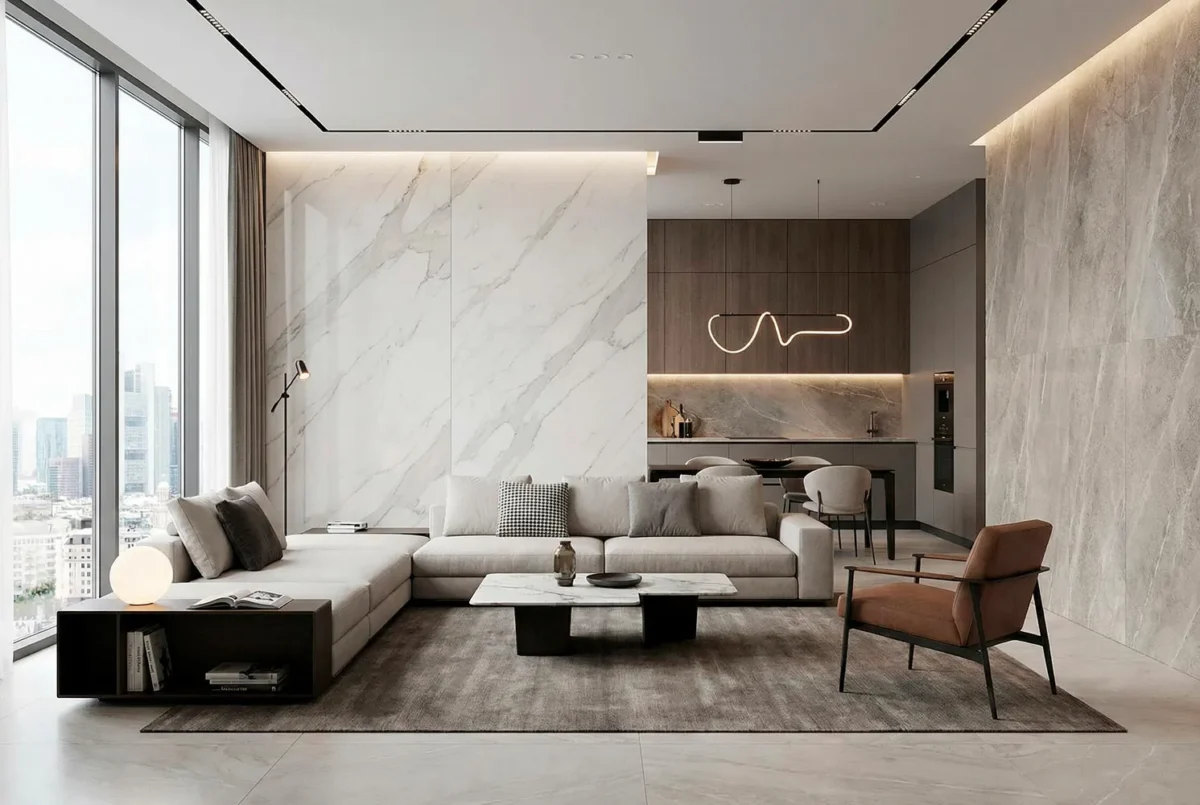
A large-format tile kitchen: functionality and aesthetics
The kitchen is the heart of every home, the place where tasty dishes are cooked, the family gathers and guests are received. It is a room with special requirements for finishing materials: resistance to moisture, grease and high temperatures, ease of cleaning and, of course, aesthetic appeal. Large-format tile meets all these requirements perfectly, turning the kitchen into a space worthy of a design magazine cover.
M-STONE is an expert in laying large-format tile, porcelain stoneware and natural stone in kitchens in Kyiv and Ukraine. We create kitchens that combine flawless functionality with refined beauty.
The food preparation area (the work zone)
This is the space between the base and wall cabinets where most of the cooking takes place.
Loads
- Splashes of grease and sauces
- Steam and condensation
- Temperature changes near the hob
- Mechanical impacts (knocks from dishes)
- Contact with acids (vinegar, lemon)
Requirements for the material
- Resistance to high temperatures
- Chemical inertness
- Easy to clean
- Hygiene
- No pores in which dirt can build up
The sink area
The space around the sink with constant contact with water.
Loads
- Constant humidity
- Splashes of water and cleaning products
- Contact with aggressive chemicals
Requirements
- Moisture resistance
- Resistance to chemicals
- Watertight joints
The floor area
The kitchen floor is under intense load.
Loads
- High traffic
- Falling objects
- Spilled liquids
- Moving furniture
Requirements
- Wear resistance (PEI IV-V)
- Slip resistance
- Impact resistance
- Ease of cleaning
The dining area
A space for eating: a table, chairs, perhaps a soft corner.
Loads
- Moderate foot traffic
- Falling crumbs and liquids
- Moving chairs
Requirements
- Aesthetics
- Comfort (the possibility of heating)
- Ease of care
The island (if there is one)
The central element of spacious kitchens.
Loads
- A combination of the work and dining zones
- Intensive use from all sides
Requirements
- Resistance to all kinds of impact
- Aesthetic perfection
- The possibility of seamless cladding
A large-format tile kitchen backsplash
The kitchen backsplash is the kitchen’s calling card and the most popular place to use large-format tile.
Advantages of a large-format backsplash
A minimum of joints A standard kitchen backsplash is 2-4 metres long and 50-80 cm high. With 10×10 cm tile that means hundreds of joints that collect grease and dirt. A single 120×60 cm slab covers 0.72 m² without a single joint.
Easy cleaning The smooth surface of a large slab is washed in seconds. Grease, sauces, splashes: everything is removed in one motion.
A seamless look A large-format backsplash imitates a solid surface of marble, onyx or concrete without the pattern being interrupted by joints.
Hygiene No joints means no places for bacteria to multiply. This is critically important for the food preparation area.
A stylish appearance A large-format backsplash looks modern, stylish and expensive. It is a sign of thoughtful design and attention to detail.
Optimal tile sizes for a backsplash
60×120 cm The most popular format. One slab covers a significant part of the backsplash. An optimal combination of practicality and aesthetics.
80×160 cm For long backsplashes. It minimises the number of joints even in large kitchens.
120×240 cm A premium solution. The possibility of making a backsplash without a single vertical joint.
120×278 cm The maximum format for backsplashes reaching the ceiling (without wall cabinets).
Popular backsplash designs
Marble-look
Calacatta
- A white background with golden-grey veining
- Luxury and elegance
- Ideal for white and light kitchens
- Goes with gold fittings
Statuario
- The whitest marble with contrasting veining
- Maximum expressiveness
- For minimalist interiors
Carrara
- Classic white with soft grey veining
- A universal option
- Suits any style
Nero Marquina
- Black with white veining
- A dramatic contrast
- For bold interiors
Concrete-look
- Industrial style
- Different shades of grey
- Combined with wood and metal
- Loft and minimalism
Metal-look
- Imitation of rusty metal, copper, bronze
- Hi-tech and industrial style
- A unique character
Monochrome
- White: purity and space
- Black: elegance and depth
- Grey: versatility
- Beige: warmth and cosiness
Wood-look
- Porcelain stoneware with a wood texture
- The warmth of a natural material
- The practicality of ceramics
Technology of installing a backsplash
1. Preparing the wall
- Levelling (differences of up to 2 mm over 2 m)
- Priming
- Marking the position of the slabs
2. Coordination with the kitchen furniture
- Exact backsplash dimensions from the furniture maker
- Allowing for the thickness of the countertop
- The position of sockets and switches
3. Cutting the slabs
- Cut-outs for sockets
- Finishing the edges
- Fitting around utilities
4. Installation
- A special adhesive for large formats
- Double application of adhesive
- Fixing with a levelling system until it hardens
5. Grouting
- Epoxy grout (resistant to grease and chemicals)
- Minimum joint width
- A colour matching the tile
6. Sealing
- Silicone at the junction with the countertop
- Sealing around sockets
A large-format tile kitchen floor
Requirements for a kitchen floor
Wear resistance The kitchen is a room with heavy foot traffic. The recommended wear-resistance class is PEI IV-V.
Slip resistance Water and grease may be spilled in the kitchen. The minimum slip-resistance class is R9, optimally R10.
Stain resistance Dropped food and spilled drinks: the floor must be easy to clean.
Impact resistance Falling dishes, pans and knives: the material must be strong.
Heat resistance If there is underfloor heating, compatibility with the heating system.
Optimal formats for a kitchen floor
60×60 cm
- A classic large format
- Suitable for kitchens from 8 m²
- An optimal combination of practicality and aesthetics
60×120 cm
- A rectangle visually stretches the space
- For kitchens from 10 m²
- A modern look
80×80 cm
- For spacious kitchens from 12 m²
- A minimum of joints
- A premium look
120×120 cm
- For large kitchens from 15 m²
- The maximum monolithic effect
- The premium segment
Recommended surface types
Matt (Matt)
- The most practical choice
- Slip resistance R10
- Scratches and marks are not visible
- Easy cleaning
Lappato (Lappato)
- A compromise between aesthetics and practicality
- A moderate shine
- Slip resistance R9-R10
- For kitchens with a moderate load
Structured (Strutturato)
- Maximum slip resistance R11
- An expressive texture
- For kitchens opening onto a terrace
Not recommended
- Polished (Lucido): slippery, scratches and marks are visible
Popular kitchen floor designs
Concrete-look
- Shades of grey from light to dark
- Industrial and minimalist style
- Practicality (dirt does not show)
- Combined with a marble backsplash
Wood-look
- Porcelain stoneware with the texture of oak, walnut, ash
- The warmth of a natural material
- The practicality of ceramics
- A cozy atmosphere
Stone-look
- Imitation of slate, granite, travertine
- Natural aesthetics
- For classic and rustic interiors
Terrazzo
- A mosaic pattern with stone chips
- A retro trend
- Hides dirt
- A unique character
Monochrome
- A plain surface
- Minimalism
- An accent on furniture and accessories
Technology of laying a kitchen floor
1. Substrate preparation
- Removing the old covering
- Levelling the screed (differences of up to 2 mm over 2 m)
- Waterproofing (if the screed is on the ground)
- Priming
2. Planning the layout
- Determining the laying direction
- Symmetry relative to the centre or the entrance
- Minimising waste
- Taking the furniture layout into account
3. Installing an underfloor heating system (if needed)
- Electric or water heating
- Testing the system before laying the tile
4. Laying the tile
- A special adhesive for large formats
- A flexible adhesive for underfloor heating
- Double application of adhesive
- A levelling system for alignment
5. Grouting the joints
- Epoxy or cement grout
- A matching or contrasting colour
- Joint width 2-3 mm
6. Expansion joints
- Flexible silicone around the perimeter
- Expansion joints for areas over 25 m²
Large-format tile kitchen walls
Besides the backsplash, large-format tile can be used to clad other walls of the kitchen.
An accent wall in the dining area
The concept: a single wall clad in striking large-format tile becomes the central element of a kitchen-dining room.
Popular solutions
- Book-match laying imitating Calacatta marble
- Travertine for a warm atmosphere
- Backlit onyx for a magical effect
- Concrete with backlit niches
Advantages
- A wow effect
- Practicality (easy to clean)
- Durability
- A unique character of the space
The wall behind the kitchen furniture
If there are no wall cabinets, the wall behind the work zone can be clad entirely in large-format tile from the countertop to the ceiling.
Advantages
- The visual height of the room
- Maximum hygiene
- Ease of cleaning
- A modern look
Cladding the kitchen island
An island clad with large-format tile becomes a sculptural element of the kitchen.
Options
- The same material as the backsplash: unity of style
- A contrasting material: an accent
- Lighting the base of the island
Marble in the kitchen
Application
- The backsplash (with a water-repellent treatment)
- The countertop (with care!)
- The island
- An accent wall
- The floor (not in the work zone)
Popular varieties
- Bianco Carrara: the classic
- Calacatta: luxury
- Crema Marfil: warmth
- Nero Marquina: contrast
Features
- Sensitivity to acids (lemon, vinegar, wine)
- The need for regular water-repellent treatment
- The possibility of stains
- The need for careful handling
M-STONE recommendations: marble in the kitchen is a luxury, but it needs special treatment. For those who value natural beauty and are ready to look after it, it is a wonderful choice. For practical homeowners we recommend marble-look porcelain stoneware.
Travertine in the kitchen
Application
- The floor (antiqued finish)
- Walls and accents
- The island
Advantages
- A warm natural look
- An antique character
- A unique texture
Features
- A porous structure needs protection
- Regular water-repellent treatment
- Sensitivity to acids
Onyx in the kitchen
Application
- A backlit backsplash: an exclusive!
- A bar counter with lighting
- Decorative niches
- An island with lighting
The effect: onyx with LED backlighting turns the kitchen into an art space. The magical glow of the stone creates a unique atmosphere.
Combining materials in the kitchen
Backsplash + floor
Classic combinations
- Calacatta marble (backsplash) + grey concrete (floor)
- White marble (backsplash) + wood (floor)
- Concrete (backsplash) + terrazzo (floor)
- Black marble (backsplash) + light wood (floor)
Principles of combining
- Contrast or tone on tone
- A single colour scheme
- A balance of warm and cool shades
- Taking the colour of the furniture into account
Backsplash + countertop
Options
- The same material: a monolithic look
- Contrasting materials: expressiveness
- Tile + natural stone
- Tile + quartz agglomerate
Tile + other materials
Tile + wood
- The warmth of wood + the practicality of tile
- Wooden fronts + a ceramic backsplash
- A wooden floor in the dining area + tile in the work area
Tile + metal
- A modern industrial style
- Metal fronts + a marble backsplash
- Copper accents + concrete-look tile
Tile + glass
- Glass fronts + a ceramic backsplash
- Glass shelves on the tile
- A glass table on a ceramic floor
Lighting systems in the kitchen
LED lighting of the backsplash
Options
- Lighting under the wall cabinets: functional lighting of the work zone
- Contour lighting: a decorative effect
- Lighting an onyx backsplash: the magic of light
Lighting niches
Niches in the backsplash or walls with LED lighting:
- Functional storage
- A decorative effect
- Displaying decor
Lighting the island
- An LED strip around the perimeter of the base: a ‘floating’ island
- Lighting the countertop from below
- Pendant lights over the island
Lighting the plinth
An LED strip in the plinth of the kitchen furniture:
- The effect of a ‘floating’ kitchen
- Night lighting
- Visually lightening the furniture
What the cost of cladding a kitchen with large-format tile depends on
The price depends on:
- The cladding area
- The type and size of the tile
- The material (porcelain stoneware, marble, onyx)
- The complexity of the project
- The number of cut-outs (sockets, utilities)
- The condition of the substrate
- The presence of backlighting
- The type of laying
For an exact calculation contact M-STONE!
Stages of working with M-STONE in the kitchen
- Consultation: discussing the design, materials and budget
- Measurements: exact measurements of the kitchen and coordination with the furniture maker
- Design: the tile layout and planning of cut-outs
- Selecting materials: help choosing the tile and accessories
- Purchasing: delivering the materials to the site
- Preparation: dismantling, levelling, priming
- Installation: laying the tile according to the technology
- Grouting: epoxy grout for the joints
- Installing accessories: sockets, switches, rails
- Handover: cleaning, quality inspection, a guarantee
Contact information
M-STONE: ideal kitchens of large-format tile
📞 Phones: +38 068 100 27 96, +38 050 914 18 99 📧 Email: [email protected] 🌐 Website: https://mstone.ua/
Social media
- Instagram: https://www.instagram.com/mstone_kiev/
- Facebook: https://www.facebook.com/mstone.kyiv/
- YouTube: https://www.youtube.com/@M-Stone_Kyiv/
Districts of Kyiv
All districts: Pechersk, Obolon, Pozniaky, Holosiiv, Podil, Sviatoshyn, Darnytsia, Troieshchyna, Vynohradar, Borshchahivka, Teremky, Solomianka
Kyiv region: Brovary, Irpin, Bucha, Vyshhorod, Vyshneve, Boyarka, Kozyn, Koncha-Zaspa, Ukrainka, Obukhiv
M-STONE advantages for the kitchen
✅ Experience cladding kitchens: we know all the nuances ✅ Coordination with furniture makers: exact dimensions and fitting ✅ Large formats: a minimum of joints on the backsplash ✅ Natural stone: marble, travertine, onyx ✅ Lighting systems: LED solutions for the kitchen ✅ Cut-outs for utilities: precise work ✅ A quality guarantee: on all work
The current cost of work for your project can be calculated in the online calculators or confirmed by the manager: it depends on the material, the slab format and the condition of the substrate. The consultation is free.

About M-STONE
This material was prepared by the M-STONE team: 20 years of brand history, installation of large-format tile and natural stone in Kyiv and across Ukraine. The company is led by Oleg Dolynskyi. The recommendations describe the typical order of work; a specialist refines the solution for your project after a consultation.
Contact us
We will price your project
Send the dimensions and slab format: we will calculate the material and installation and suggest the timing.