Cladding Swimming Pools and Spa Areas with Large-Format Tile and Natural Stone
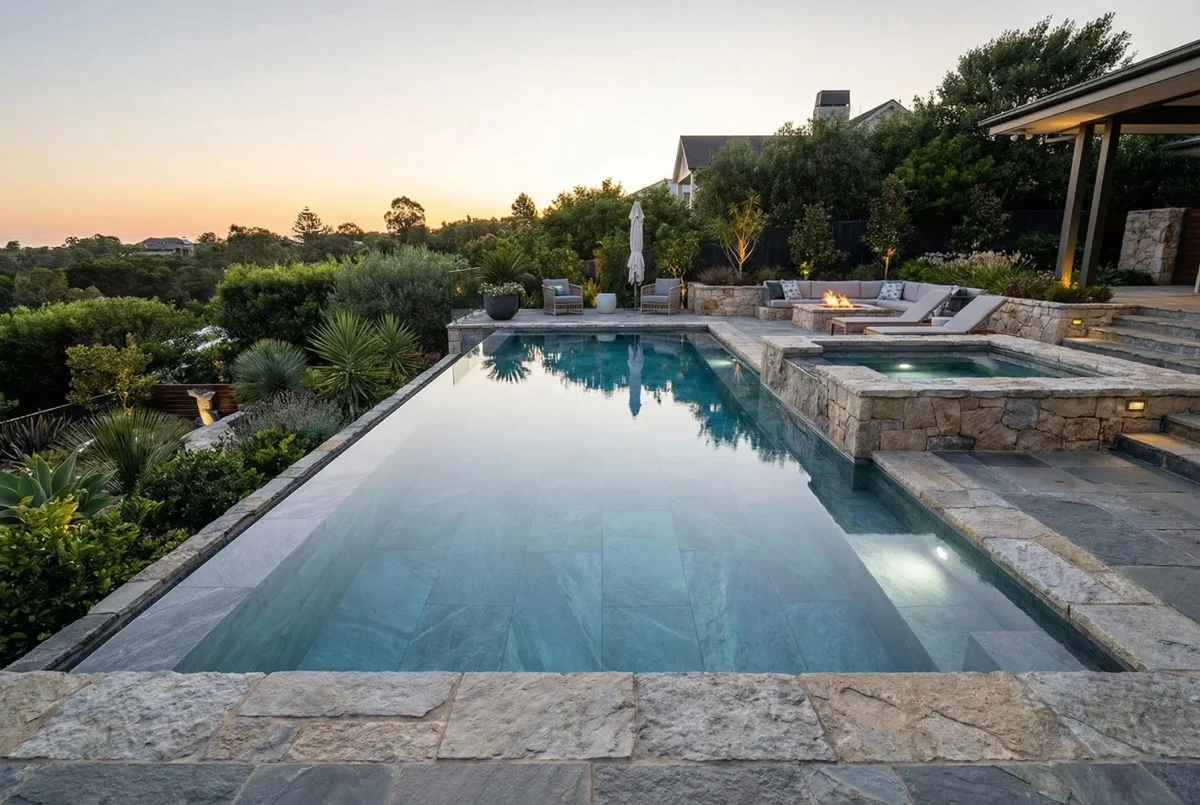
A pool is the heart of your leisure area
A private swimming pool is not just a luxury but an investment in health, comfort and quality of life. However, the beauty and durability of a pool depend directly on the right choice of facing materials and the quality of their installation. Water, chemical reagents, temperature changes and constant humidity create extreme conditions that only specialised materials, laid in compliance with the technology, can withstand.
M-STONE has experience cladding pools and spa areas of various types, from compact home plunge pools to large hotel complexes. We know the specifics of working with water features and guarantee a result that will last for decades.
Types of pools and their features
By location
Indoor pools
Located inside a building: in private houses, hotels, fitness centres.
Features:
- A stable temperature
- Protection from the weather
- Increased humidity in the room
- A need for good ventilation
- The possibility of using a wider range of materials
Requirements for the cladding:
- Water resistance
- Resistance to chemicals (chlorine, pH regulators)
- Slip resistance for the edges and walkways
- Aesthetics
Outdoor pools
Located in the open air: in yards, on terraces, in parks.
Features:
- The effect of weather
- Temperature changes
- Freeze-thaw cycles (for unheated pools)
- Solar radiation
- Contamination (leaves, dust, insects)
Requirements for the cladding:
- Frost resistance (for seasonal pools)
- UV resistance
- Increased strength
- Slip resistance (wet surfaces + possible rain)
By construction
Skimmer pools
The water level is 10-15 cm below the edge. Water enters the filtration system through skimmers (openings in the walls).
Features of the cladding:
- A visible waterline
- The edge is above the water level
- A standard design
Overflow pools
The water level is flush with the edge. Water spills over the edge into an overflow channel.
Features of the cladding:
- The waterline is not visible
- A ‘mirror’ effect
- Special overflow grilles
- A more complex construction
- A premium look
By purpose
Swimming pools
- Length 15-25 m (home) or 25-50 m (sports)
- Depth 1.2-2 m
- Swimming lanes
- A minimum of decor, a maximum of functionality
Recreational pools
- Free form
- Variable depth
- Relaxation areas, waterfalls, hydromassage
- An emphasis on design
Children’s pools
- Shallow depth (40-80 cm)
- Increased safety
- Bright design
- Soft materials for the edges
Spa pools (jacuzzis)
- Compact dimensions
- Hydromassage jets
- Water heating
- Raised temperature
Plunge pools (hot and cold)
- For baths and saunas
- A small volume
- Contrasting temperatures
- Wood or stone in the finish
Materials for cladding pools
Ceramic tile (clinker)
Characteristics
- A traditional material for pools
- Water absorption 2-6%
- A wide choice of colours
- Special shapes (corners, edges, steps)
Advantages
- An affordable price
- A variety of shapes and sizes
- Proven technology
- Individual elements are easy to replace
Limitations
- More joints (potential places for leaks)
- Less aesthetic compared with large formats
- Not suitable for premium projects
Porcelain stoneware
Characteristics
- Water absorption below 0.5%
- High strength
- Frost resistance
- Chemical resistance
Formats for pools
Mosaic (2.5×2.5 to 5×5 cm)
- The classic choice for the pool basin
- The ability to follow curved surfaces
- A variety of patterns and gradients
Medium formats (10×10 to 30×30 cm)
- For the walls and floor of the pool
- A balance between aesthetics and practicality
Large formats (60×60, 60×120 cm)
- For edges and walkways
- A minimum of joints
- A modern premium look
Advantages
- Practically zero water absorption
- Resistance to chlorine and chemicals
- Frost resistance
- Durability
- A wide choice of designs
Glass mosaic
Characteristics
- Zero water absorption
- Resistance to chemicals
- Bright colours
- An effect of depth and sparkle
Advantages
- Perfect water resistance
- Colours do not fade
- The possibility of complex patterns
- A premium look
Limitations
- A higher cost
- Needs quality adhesive and grout
- A slippery surface (not for walkways)
Natural stone
Travertine
Characteristics:
- A traditional material of Roman baths
- Natural beauty
- Does not heat up in the sun
- Pleasant to walk on barefoot
Use:
- Pool edges
- Walkways
- Relaxation areas by the pool
- Steps
Finishes for pools:
- Antiquing (slip resistance)
- Pore filling
- A water-repellent treatment is mandatory!
Granite
Characteristics:
- Maximum strength
- Minimal water absorption
- Frost resistance
Use:
- Edges of public pools
- Outdoor pools
- High-load zones
Finishes:
- Heat-treated (slip resistance)
- Bush-hammered (texture)
Marble
Characteristics:
- A luxurious look
- Porosity (needs protection)
- Sensitivity to chemicals
Use:
- Decorative elements
- Edges in indoor pools
- Spa areas
A caution: marble is sensitive to chlorine and acids. Use it only with a quality water-repellent treatment and in indoor pools with a controlled chemical composition of the water.
Special materials
A PVC membrane (liner)
Characteristics:
- Waterproofing and finish in one
- Quick installation
- Different colours and patterns
Use:
- Frame pools
- Renovation of old pools
- Budget projects
Limitations:
- Less durable than tile
- A less prestigious look
- Damaged mechanically
Pool zones and their cladding
The pool basin (floor and walls)
Requirements
- Absolute water resistance
- Resistance to chemicals
- A smooth surface (easy to clean)
- Light colours (visibility in the water)
Recommended materials
- Glass mosaic
- Ceramic mosaic
- Small and medium formats of porcelain stoneware
- A PVC membrane
Design
- A plain surface (the classic)
- A gradient (from light to dark with depth)
- Patterns and pictures (dolphins, waves, logos)
- Swimming lanes (contrasting lines)
The waterline
The zone of contact between water and air is the most heavily loaded area.
Problems
- Deposits of salts and lime
- Contamination (body grease, cosmetics)
- The action of chemicals in concentrated form
- Fluctuations in the water level
Recommendations
- Special waterline tile
- A darker colour (dirt is less noticeable)
- A decorative border
- Regular cleaning
Pool edges
The horizontal surface around the perimeter of the pool.
Requirements
- Slip resistance (wet feet)
- Comfort for sitting
- Does not heat up in the sun
- Rounded edges (safety)
Recommended materials
- Travertine (an ideal choice!)
- Structured porcelain stoneware
- Heat-treated granite
- Special edge stones
Edge shapes
- A flat edge
- An edge with a drip groove
- An edge with an overflow channel
- An edge with integrated lighting
Walkways
The area around the pool for walking.
Requirements
- Maximum slip resistance (R11-R12)
- Comfort for bare feet
- It does not heat up
- Ease of cleaning
- Drainage (water removal)
Recommended materials
- Antiqued travertine
- Structured porcelain stoneware 20 mm
- Heat-treated granite
- Decking (for contrast)
Slope: a mandatory slope of 1-2% away from the pool to drain the water.
Steps and handrails
Requirements for steps
- Maximum slip resistance
- Contrasting marking (visibility under water)
- A comfortable step height
- Rounded edges
Materials
- The same tile as the basin
- Special steps with notches
- Stainless steel (handrails)
Showers and changing rooms
Auxiliary rooms near the pool.
Requirements
- Hygiene
- Slip resistance
- Water resistance
- Ease of disinfection
Recommendations
- Large-format tile (a minimum of joints)
- Epoxy grout
- A structured surface for the floor
- Drainage channels
Pool waterproofing is a critical stage
Why waterproofing is critical
A pool is a reservoir of water that creates constant pressure on the structure. The slightest crack or defect in the waterproofing leads to:
- Loss of water
- Destruction of the structure
- Damage to the foundation
- Flooding of neighbouring rooms
- Corrosion of the reinforcement
Types of waterproofing for pools
Cement waterproofing
Materials:
- Two-component cement-polymer mixes
- Penetrating waterproofing
Advantages:
- Adhesion to concrete
- The possibility of laying tile directly
- Self-healing of cracks (penetrating)
Popular brands:
- Mapei Mapelastic
- Litokol Elastocem
- Penetron
Roll waterproofing
Materials:
- Bitumen-polymer membranes
- PVC membranes
- EPDM membranes
Advantages:
- Guaranteed thickness
- Mechanical strength
- Speed of application
A PVC liner as waterproofing
A feature: it performs the functions of waterproofing and the finish coating at the same time.
Critical waterproofing zones
The junction of the floor with the walls
- A cove (a smooth transition)
- An additional layer of waterproofing
- Reinforcing tape
Places where utilities pass through
- Jets
- Skimmers
- Bottom drains
- Lighting
The solution:
- Special collars
- Sealing
- Reinforced waterproofing
Expansion joints
- Filled with flexible sealant
- Waterproofing tapes
Technology of cladding a pool
Substrate preparation
Requirements for the concrete
- Grade of at least M300
- Watertightness of W8 or higher
- Frost resistance of F150+ (for outdoor pools)
- An age of at least 28 days
- No cracks or defects
Preparation
- Checking the strength of the concrete
- Repairing cracks and defects
- Cleaning off dust and dirt
- Scoring for adhesion (if necessary)
- Dampening (for cement waterproofing)
Waterproofing
The sequence
- Priming the surface
- Treating critical zones (corners, junctions, utilities)
- Reinforcing tape on all corners and joints
- The first layer of waterproofing
- Drying
- The second layer of waterproofing (perpendicular)
- Checking continuity
- A watertightness test (filling with water for 24-48 hours)
Laying the tile
Choosing the adhesive
- Class C2S2 (highly flexible)
- Water resistant
- Frost resistant (for outdoor pools)
- Resistant to chemicals
Recommended adhesives:
- Mapei Keraflex Maxi S1
- Litokol Litoelastic
- Kerakoll H40 Eco Flex
Laying technique
- Applying adhesive to the base (with a notched trowel)
- Applying adhesive to the tile
- Pressing the tile down
- Levelling
- Checking there are no voids (100% coverage!)
- Forming the joints
Features for the basin
- Start from the floor
- Move from the centre to the edges
- Walls from bottom to top
- Checking verticality
Grouting the joints
Choosing grout: for pools ONLY EPOXY grout!
Reasons:
- Zero water absorption
- Chlorine resistance
- Resistance to mould
- Durability
- Hygiene
Recommended grouts:
- Mapei Kerapoxy
- Litokol Starlike EVO
- Kerakoll Fugalite Eco
Application technique
- Cleaning the joints
- Mixing the components
- Applying with a rubber float
- Removing the excess immediately!
- Cleaning with special products
- Waiting before filling with water
Putting into service
Waiting
- After laying the tile: at least 7-14 days
- After grouting: at least 7 days
The first filling
- Slow filling (over several days)
- Checking for leaks
- Balancing the chemical composition of the water
- Temperature regime
Spa areas: hammam, sauna, jacuzzi
Hammam (Turkish bath)
Conditions
- Temperature 40-50°C
- Humidity of about 100%
- Constant steam
- Contact with water
Requirements for materials
- Absolute water resistance
- Heat resistance
- Resistance to steam
- Hygiene
Recommended materials
- Marble (the classic of the hammam)
- Porcelain stoneware
- Mosaic
Elements of a hammam
- Loungers (kurna): heated marble ones
- Walls: marble or mosaic
- Floor: sloped to a drain, anti-slip
- Ceiling: domed so that condensation runs off
Sauna (Finnish bath)
Conditions
- Temperature 80-110°C
- Low humidity
- Dry heat
- Wood is the main material
Use of tile
- The floor (not wood, which is more hygienic)
- The stove area
- The shower by the sauna
Recommended materials
- Porcelain stoneware (floor)
- Heat-resistant tile (the stove area)
- Natural stone (decor)
Jacuzzi (hydromassage bath)
Conditions
- Warm water (35-40°C)
- Hydromassage
- Chemical reagents
- A compact space
Recommendations
- Mosaic (the possibility of rounded shapes)
- Porcelain stoneware (for rectangular ones)
- Epoxy grout
- Anti-slip edges
What the cost of cladding a pool depends on
Key factors
Type of pool
- Indoor vs outdoor
- Skimmer vs overflow
- Size and depth
Materials
- Mosaic vs tile vs stone
- Class of material
- Special elements (edges, steps)
Complexity
- Shape of the basin (rectangular vs free-form)
- Presence of elements (waterfalls, grottos)
- Accessibility of the site
Work
- Waterproofing
- Laying
- Grouting
For an exact calculation, contact M-STONE!
Contact information
M-STONE: cladding of pools and spa areas
📞 Phones: +38 068 100 27 96, +38 050 914 18 99 📧 Email: [email protected] 🌐 Website: https://mstone.ua/
Social media
- Instagram: https://www.instagram.com/mstone_kiev/
- Facebook: https://www.facebook.com/mstone.kyiv/
- YouTube: https://www.youtube.com/@M-Stone_Kyiv/
Geography of work
Kyiv: all districts Kyiv region: Brovary, Irpin, Bucha, Vyshhorod, Kozyn, Koncha-Zaspa and others All of Ukraine: visits for pool projects
M-STONE advantages for pools
✅ Experience cladding pools: private and commercial ✅ Waterproofing: reliable protection against leaks ✅ All types of materials: mosaic, tile, travertine, marble ✅ Epoxy grout: the standard for pools ✅ Spa areas: hammams, saunas, jacuzzis ✅ A guarantee: on all work carried out
The current cost of work for your project can be calculated in the online calculators or confirmed by the manager: it depends on the material, the slab format and the condition of the substrate. The consultation is free.

About M-STONE
This material was prepared by the M-STONE team: 20 years of brand history, installation of large-format tile and natural stone in Kyiv and across Ukraine. The company is led by Oleg Dolynskyi. The recommendations describe the typical order of work; a specialist refines the solution for your project after a consultation.
Contact us
We will price your project
Send the dimensions and slab format: we will calculate the material and installation and suggest the timing.