Installing Large-Format Tile on Stairs: Technology, Materials and Design
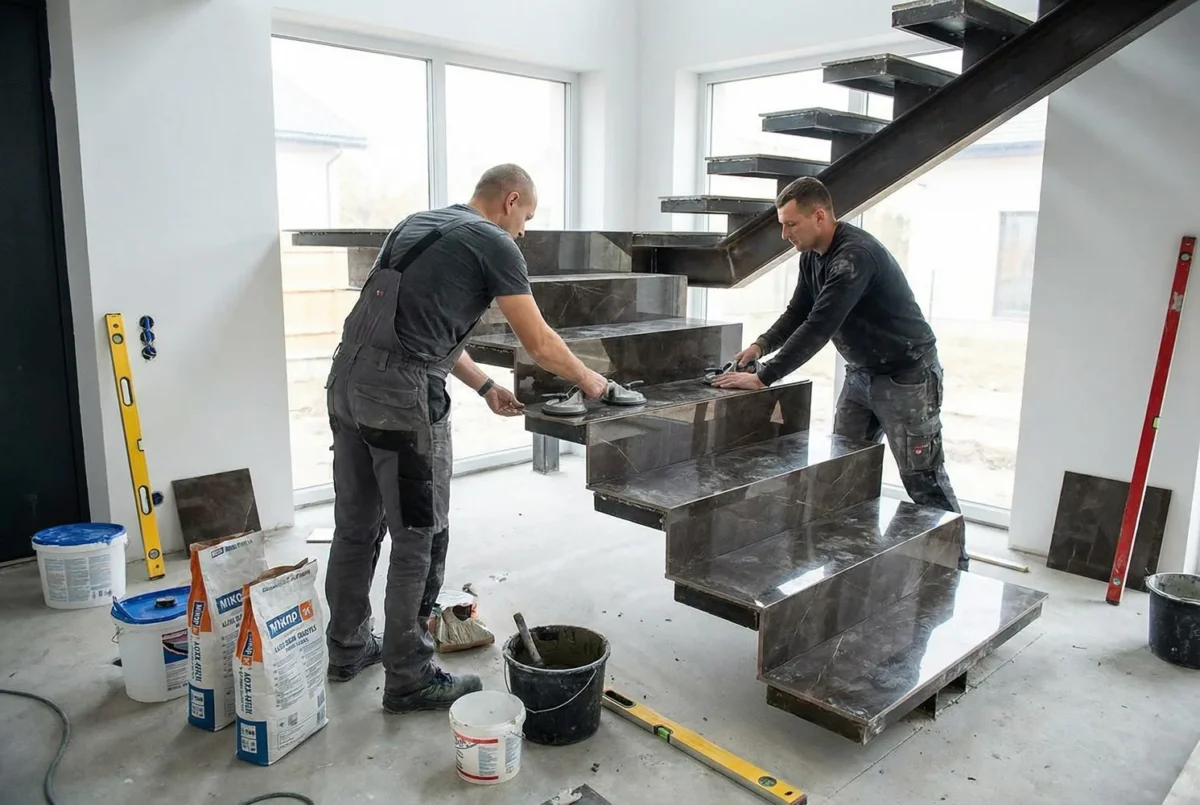
Large-format tile stairs: the architectural accent of your space
A staircase is not just a functional element connecting floors. It is an architectural dominant that can become a real decoration of an interior or exterior. Large-format tile, porcelain stoneware and natural stone let you create stairs that impress with their beauty, elegance and durability.
M-STONE is an expert in cladding stairs with large-format tile and natural stone in Kyiv and Ukraine. Our craftsmen create stairs that become the central element of a space, from classic marble flights to modern minimalist structures.
Types of stairs and the specifics of cladding them
By location
Interior stairs
Stairs inside a house have special requirements:
- Aesthetics (harmony with the interior)
- Safety (moderate slip resistance)
- Comfort (pleasant tactile feel)
- Acoustics (minimising the noise of footsteps)
Exterior stairs
Outdoor stairs work in extreme conditions:
- Frost resistance (freeze-thaw cycles)
- Slip resistance (rain, snow, ice)
- UV resistance (keeping colour)
- Strength (intensive use)
By construction
Straight flights
- The simplest construction
- One or several flights
- Optimal for cladding with large-format tile
- A minimum of material waste
Turning stairs (L-shaped, U-shaped)
- Flights with a 90° or 180° turn
- Intermediate landings
- More complex cutting geometry
- Need careful layout planning
Spiral stairs
- Round or oval in plan
- Each step is wedge-shaped
- The most complex to clad
- Need individual fabrication of elements
Cantilever (floating) stairs
- Steps are fixed to the wall without risers
- A modern minimalist look
- A “floating” staircase effect
- Limited width of steps
Modular stairs on stringers
- A metal or wooden frame
- Steps are laid on the stringers
- The possibility of combining materials
- A modern industrial style
Elements of a staircase and their cladding
The step (tread)
The horizontal surface on which the foot lands.
Standard dimensions
- Width: 25-32 cm (optimally 28-30 cm)
- Length: 80-150 cm (depending on the width of the flight)
- Cladding thickness: 10-30 mm
Cladding specifics
- An anti-slip surface
- A rounded or straight front edge
- The possibility of an overhang above the riser
The riser
The vertical part between steps.
Standard dimensions
- Height: 15-20 cm (optimally 16-18 cm)
- Length: according to the width of the flight
- Thickness: usually less than that of the tread
Finishing options
- The same material as the tread
- A contrasting material (an accent)
- Mirror or glass (a modern style)
- Backlit (an LED strip)
The nosing (the step’s edge)
The front edge of the step that overhangs the riser.
Types of nosing
- Straight: a minimalist look
- Rounded (bullnose): classic, safe
- Shaped: decorative, for classic interiors
- With an insert: an anti-slip or decorative strip
Functions of the nosing
- A visual finish to the step
- Protection of the edge from chipping
- An anti-slip element
- A place for LED backlighting
The landing
The horizontal surface between flights or at the beginning/end of the stairs.
Features
- The same material as the steps
- The possibility of a decorative pattern
- Matching with the floor of the storey
The stair skirting
Finishing the place where the stairs meet the wall.
Options
- A ceramic skirting in the tone of the steps
- A stone skirting
- A hidden skirting (flush with the wall)
- A backlit skirting
Balustrades and handrails
Combination options
- Stone balusters: a classic style
- Wrought-iron balustrades: elegance
- Glass balustrades: modernity
- Metal handrails: minimalism
- Wooden elements: warmth
Materials for cladding stairs
Porcelain stoneware
Advantages
- High strength and wear resistance
- A wide choice of designs (marble-look, wood-look, concrete-look)
- An affordable price compared with natural stone
- Stable characteristics
- Ease of care
Formats for stairs
- Ready-made steps 33×120 cm, 33×150 cm
- Cutting from slabs of 60×120, 80×160, 120×240 cm
- Sets (tread + riser + skirting)
Types of surface for stairs
- Matt: a universal choice
- Structured: maximum safety
- Lappato: for interior stairs
Marble
Advantages
- Unrivalled natural beauty
- A unique pattern on every slab
- Prestige and status
- The possibility of restoration
- Durability (centuries)
Popular varieties for stairs
- Bianco Carrara: a classic white
- Calacatta: a premium one with golden veins
- Crema Marfil: a warm beige
- Emperador: a luxurious brown
- Nero Marquina: an elegant black
Features
- Sensitivity to acids
- The need for a water-repellent treatment
- The possibility of polishing out scratches
- An aged (antiqued) finish for slip resistance (exterior stairs)
Travertine
Advantages
- A warm natural look
- An antique character
- A pleasant tactile feel
- Not slippery (especially antiqued)
- Does not heat up in the sun
Popular options
- Classic: beige with characteristic pores
- Noce: a rich brown
- Silver: a cool grey
Application
- Interior stairs in a classic style
- Exterior stairs in a Mediterranean style
- Stairs by a pool
Granite
Advantages
- The strongest natural stone
- Minimal water absorption
- Ideal frost resistance
- Resistance to abrasion
- Durability
Application
- Exterior stairs with a high load
- Stairs of public buildings
- Grand stairs
Finishes for stairs
- Heat-treated (flamed): maximum slip resistance
- Bush-hammered: a textured surface
- Polished: for interior stairs
Onyx
Features
- Translucency when backlit
- Exclusivity and uniqueness
- The highest price category
Application
- Backlit risers: a magical effect
- Decorative inserts
- Exclusive projects
Design solutions for stairs
Monochrome style
The concept: treads and risers made of one material in one colour.
The effect: elegance, wholeness, visual lightness.
Materials: white marble, light porcelain stoneware, beige travertine.
Contrasting combination
The concept: treads and risers of different colours or materials.
Options
- White treads + black risers
- Light marble + dark wood
- Beige travertine + brown inserts
- Grey porcelain stoneware + white grout (an accent on the joints)
The effect: dynamism, expressiveness, modernity.
Book-match on stairs
The concept: mirrored laying of marble on landings or wide steps.
The effect: a symmetrical pattern, luxury, uniqueness.
Implementation: requires careful selection of slabs and high craftsmanship.
Inserts and decor
Options
- Marble rosettes on landings
- Mosaic inserts
- Metal inlays
- Contrasting stripes
Lighting the stairs
Types of lighting
Riser lighting An LED strip under each step creates the effect of a “floating” staircase.
Nosing lighting The light is built into the front edge of the step.
Handrail lighting An LED strip along or inside the handrail.
Skirting lighting Light along the wall at floor level.
Spotlights Built into the wall or the steps.
Possibilities
- Motion sensors (automatic switching on)
- Dimming (brightness control)
- RGB (colour change)
- Scenarios (night mode, party)
The technology of cladding stairs by M-STONE
The preparatory stage
1. Surveying the structure
- Checking the geometry of the stairs
- Measuring all the steps (they may differ!)
- Assessing the condition of the substrate
- Checking flatness and verticality
2. Design
- Choosing the layout
- Planning the cuts
- Agreeing the decorative elements
- Calculating materials
3. Making the elements
- Cutting the steps to size
- Finishing the nosing
- Making the risers
- Fitting the skirtings
Substrate preparation
Concrete stairs
- Cleaning off dust and dirt
- Repairing cracks and defects
- Levelling the surface (if needed)
- Priming
Metal stairs
- Checking the rigidity of the structure
- Anti-corrosion treatment
- Installing backing boards (cement-bonded particle board, plywood)
- Waterproofing (for exterior stairs)
Wooden stairs
- Checking strength and rigidity
- Eliminating squeaks
- Installing cement-bonded or OSB boards
- Waterproofing
Laying the tile
The sequence of work
1. Laying the risers
- We start from the bottom
- Applying adhesive to the substrate and the tile
- Installing with levelling
- Fixing with temporary props
2. Laying the treads
- After the riser adhesive has set
- Controlling the nosing overhang
- Checking the horizontal
- Keeping an equal gap
3. Laying the landings
- Like an ordinary floor
- Matching the pattern with the steps
- Book-match (according to the project)
4. Installing the skirting
- After the main work is finished
- Fitting on site
- A neat junction with the steps
Grouting the joints
Specifics of grouting stairs
- Flexible grout to compensate for vibration
- A colour matching the tile or contrasting
- Careful filling of all joints
- Forming expansion joints
Finishing work
Water-repellent treatment (for natural stone)
- Applying a protective impregnation
- Increasing resistance to stains
- Making care easier
Installing the balustrade
- Installing balusters or glass
- Installing handrails
- Checking reliability
Installing the lighting
- Connecting LED strips
- Installing controllers
- Setting the modes
Specifics of cladding different types of stairs
Exterior stairs
Specific requirements
- Frost-resistant materials
- An anti-slip surface R11-R12
- A slope of the steps of 1-2% away from the building
- Expansion joints
- Drip edges for draining water
Recommended materials
- Structured porcelain stoneware
- Heat-treated granite
- Antiqued travertine
Additional elements
- Step heating systems
- Rubber anti-slip inserts
- Handrails with heating
Stairs to a pool
Specific requirements
- Constant contact with water
- Walking barefoot
- Resistance to chemicals (chlorine)
- Maximum slip resistance
Recommended materials
- Travertine: warm, not slippery
- Structured porcelain stoneware
- Special tile for pools
Spiral stairs
Cladding specifics
- Every step has an individual shape
- Making from templates
- High complexity of the work
- More material waste
Recommended materials
- Natural stone (individual fabrication)
- Porcelain stoneware (cut to order)
Cantilever stairs
Features
- Limited thickness of the cladding
- Visibility of the step edges
- An accent on the nosing
The solution
- Thin porcelain stoneware (6 mm)
- Finishing the visible edges
- Integrating the lighting into the nosing
What the cost of cladding stairs depends on
The price depends on:
- The type and construction of the stairs
- The number of steps and landings
- The material (porcelain stoneware, marble, travertine)
- The type of nosing
- The presence of decorative elements
- The complexity of the geometry
- Lighting
- Interior or exterior stairs
For an exact calculation contact M-STONE!
Contact information
M-STONE: professional cladding of stairs
📞 Phones: +38 068 100 27 96, +38 050 914 18 99 📧 Email: [email protected] 🌐 Website: https://mstone.ua/
Social media
- Instagram: https://www.instagram.com/mstone_kiev/
- Facebook: https://www.facebook.com/mstone.kyiv/
- YouTube: https://www.youtube.com/@M-Stone_Kyiv/
Geography of work
Kyiv: all districts of the city Kyiv region: Brovary, Irpin, Bucha, Vyshhorod, Vyshneve, Boiarka, Kozyn, Koncha-Zaspa and others Ukraine: travel to large projects across the country
M-STONE’s advantages for stairs
✅ Experience in cladding stairs: all types of construction ✅ Own production: making steps to size ✅ Work with the nosing: all types of finishing ✅ Natural stone: marble, travertine, granite ✅ Lighting systems: LED integration ✅ Quality guarantee: on all work
The current cost of work for your project can be calculated in the online calculators or confirmed by the manager: it depends on the material, the slab format and the condition of the substrate. The consultation is free.

About M-STONE
This material was prepared by the M-STONE team: 20 years of brand history, installation of large-format tile and natural stone in Kyiv and across Ukraine. The company is led by Oleg Dolynskyi. The recommendations describe the typical order of work; a specialist refines the solution for your project after a consultation.
Contact us
We will price your project
Send the dimensions and slab format: we will calculate the material and installation and suggest the timing.