Large-Format Tile in a Minimalist Style: Fewer Details, More Space
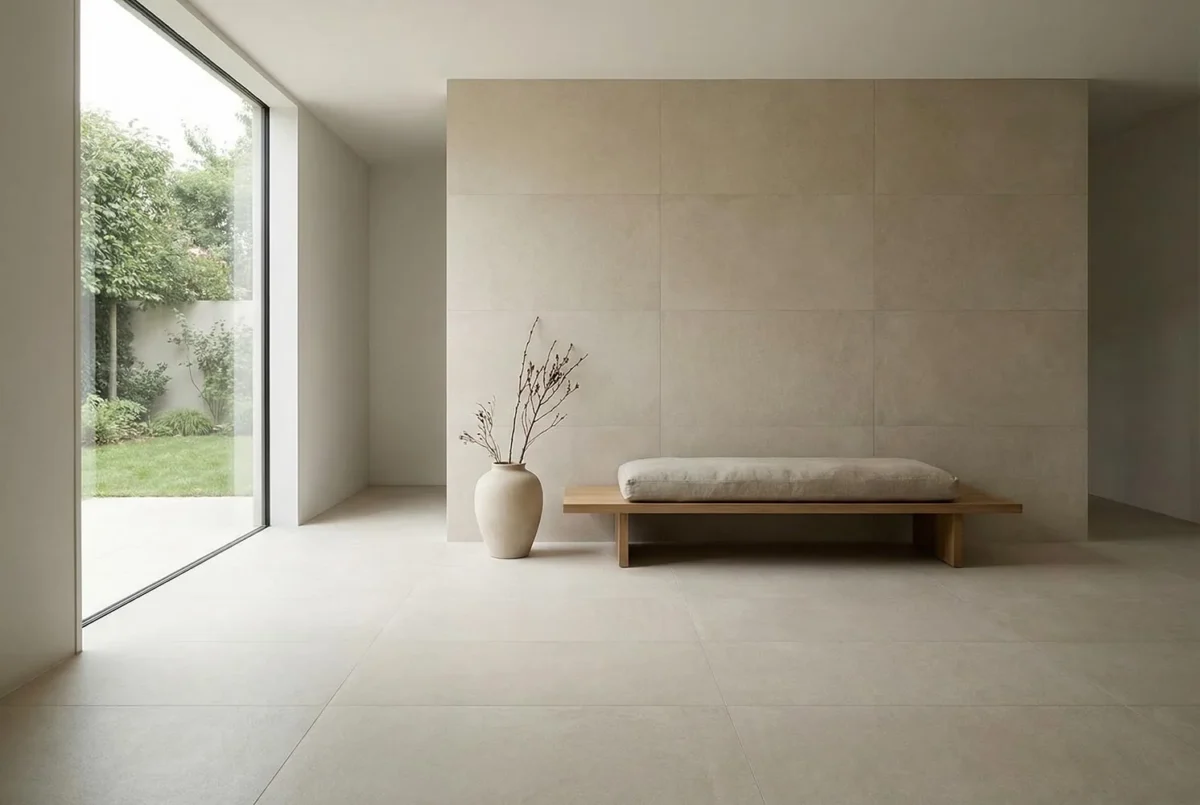
Minimalism is a philosophy of space and freedom
Minimalism is not just an interior style but a whole philosophy of life, where every detail matters and anything superfluous is absent. In a world overloaded with information and things, a minimalist interior becomes an oasis of calm and harmony. And large-format tile is the ideal material for embodying this philosophy, because it creates clean, seamless surfaces, which are the basis of minimalist design.
M-STONE specialises in creating minimalist interiors using large-format tile and natural stone. We help our clients reach that perfect balance when the space breathes and every element is in its place.
The principles of minimalism in the interior
The main characteristics of the style
Clean lines
- Straight lines and geometric forms
- No complicated decorative elements
- Clear outlines of furniture and architectural elements
- Symmetry or considered asymmetry
Open space
- A maximum of free space
- A minimum of partitions
- A feeling of air and lightness
- Functional zoning without walls
A limited palette
- 2-3 main colours
- Neutral shades as the base
- Accents that are restrained and considered
- Monochrome or tonal transitions
Quality instead of quantity
- Fewer things, but of better quality
- Every element is functional
- Premium materials
- Durability and timelessness
Natural light
- Large windows
- A minimum of curtains or none
- Light as a design element
- Reflection of light from surfaces
Hidden functionality
- Built-in storage systems
- Hidden appliances
- No visible clutter
- Clean surfaces
Variations of minimalism
Scandinavian minimalism
- Warm light tones
- Natural materials
- Wood elements
- Coziness and hygge
Japanese minimalism (Wabi-Sabi)
- Natural imperfection
- Natural textures
- Asymmetry
- A link with nature
Industrial minimalism
- Concrete, metal, glass
- Rough textures
- A neutral palette
- Loft elements
Luxury minimalism
- Premium materials
- Flawless execution
- Hidden details of luxury
- Marble, onyx, designer furniture
Why large-format tile is the ideal choice for minimalism
A minimum of joints, a maximum of space
Comparing the visual effect
| Tile format | Number of joints per 10 m² | Visual effect |
|---|---|---|
| 30×30 cm | ~111 joints | A fragmented surface |
| 60×60 cm | ~28 joints | Moderately calm |
| 60×120 cm | ~14 joints | Clean, calm |
| 120×120 cm | ~7 joints | Monolithic |
| 120×240 cm | ~4 joints | Almost seamless |
| 160×320 cm | ~2 joints | Absolute monolithic look |
For minimalism the number of joints is critical: the fewer, the better. Large-format tile makes it possible to create a feeling of a continuous surface.
Clean surfaces
Large-format tile provides:
- Flat, smooth planes
- No visual ‘noise’
- An ideal background for furniture and decor
- Reflection of light without obstacles
Versatility of use
The same tile can cover:
This creates unity of the space, a key trait of minimalism.
Large-format tile designs for minimalism
Monocolour (plain tile)
White
- Purity and freshness
- Maximum widening of the space
- Reflection of light
- The basis of Scandinavian minimalism
Grey
- Universal neutrality
- From light grey to anthracite
- A modern industrial look
- Practicality (it shows less dirt)
Black
- Drama and depth
- For large spaces
- As an accent or a base
- Luxury minimalism
Beige/Greige
- A warm neutral
- A blend of grey and beige
- Cozy minimalism
- Scandinavian and Japanese motifs
Terracotta/Earth tones
- A link with nature
- Warmth
- A modern trend
- A wabi-sabi aesthetic
Concrete-look
Why concrete is a material of minimalism
- An industrial aesthetic
- Neutrality
- Modernity
- Texture without a pattern
Options
Smooth concrete
- A clean, modern look
- A minimum of texture
- Perfectly flat surfaces
Textured concrete
- Traces of formwork
- Natural irregularities
- Character and individuality
Microcement
- A seamless look
- Modern interiors
- Elegant simplicity
Stone-look
Marble for minimalism
White marble (Calacatta, Statuario)
- Classic elegance
- A white background with veining
- Not too busy a pattern
- Luxury minimalism
Grey marble (Pietra Grey)
- Restrained luxury
- Neutrality
- Delicate veining
Black marble (Nero Marquina)
- Dramatic minimalism
- Contrast
- Accent solutions
Travertine
- A natural texture
- Warm tones
- Mediterranean and modern minimalism
- Filled pores for smoothness
Metal-look
Corten (rusty metal)
- Industrial minimalism
- Warm metallic tones
- Accent walls
- An unexpected element
Steel/Titanium
- A cold industrial look
- Grey metallic shades
- Modernity
- Hi-tech minimalism
Uniform textures
Terrazzo
- A restrained pattern
- Neutral colours
- Retro-modern
- Fine chips: a calmer look
A linen texture
- A delicate pattern
- A tactile effect
- Warmth
- Scandinavian style
Colour solutions for minimalist interiors
A monochrome palette
White + white + white
- Different shades of white
- Different textures
- A play of light and shadow
- Maximum purity
50 shades of grey
- From light to dark
- Tonal transitions
- Depth without colour
- A modern classic
A neutral palette with an accent
Base: white/grey Accent: black
- A classic combination
- Contrast
- A graphic look
- Timelessness
Base: white/grey Accent: wood
- Warmth in a cool space
- Scandinavian style
- Naturalness
- Coziness
Base: white/grey Accent: brass/gold
- Elegant luxury
- A warm metallic accent
- Details (fittings, light fixtures)
- Luxury minimalism
Warm minimalism
A beige range
- Cream, sand, camel
- Warmth and coziness
- Naturalness
- Japanese and Scandinavian influence
An earth range
- Terracotta, ochre, sienna
- A link with nature
- A 2024-2025 trend
- Wabi-sabi
Using large-format tile in a minimalist interior
Floors
Principles
- One material across the whole area (or very similar ones)
- Minimum joints
- A neutral colour
- A matt or satin surface
M-STONE recommendations
- A 120×120 cm format or larger
- A 2 mm joint, grout matching the tile
- Concrete, light stone or plain tile
- A rectified edge is a must
Walls
Principles
- Clean planes
- No decorative borders and inserts
- One material or a considered combination
- Vertical laying for height
An accent wall
- One wall in a different material or colour
- The focal point of the space
- A restrained accent
Bathroom
A minimalist bathroom
- One kind of tile on the floor and walls
- A large format (fewer joints)
- Wall-hung plumbing (the floor looks visually free)
- Concealed installation (a built-in shower system)
- Niches instead of shelves
The shower area
- Curbless (flush with the floor)
- A linear drain (minimalist)
- A frameless glass partition
- The same tile as in the main space
The kitchen
A minimalist kitchen
- Smooth fronts without handles (push-to-open)
- Integrated appliances
- Clean countertops
- A hidden extractor
Backsplash
- Large-format tile (one slab for the whole backsplash)
- Or the same material as the countertop
- A minimum of joints
The island
- Cladding with porcelain stoneware
- Clean lines
- Functional minimalism
Living room
A minimalist living room
- Open space
- A minimum of furniture
- Hidden storage
- An emphasis on the quality of materials
The TV area
- A built-in TV
- Or tile as a backdrop behind the TV
- Hidden cables
- A clean wall
The fireplace
- Built-in (linear)
- A minimalist surround
- The same tile as the wall
- Or a contrasting accent
Technical aspects of laying for minimalism
Achieving a ‘seamless’ look
Minimum joint width
- 1.5-2 mm for large formats
- Only rectified tile
- A perfectly flat base
Matching grout
- Matching the grout colour exactly to the tile
- Testing on samples
- Epoxy grout (it does not darken)
A 45° mitre
- For external corners without visible edges
- A perfect junction
- Needs craftsmanship
Hidden junctions
The skirting board
- Concealed (flush with the wall)
- Or a skirting made from the same tile
- A minimal height
- Without a decorative profile
Junctions with other materials
- A concealed profile
- Or a clean junction without a profile
- Minimum joint
Hidden engineering
Inspection hatches
- Concealed hatches under tile
- Magnetic or push-to-open opening
- Visually invisible
Drains and outlets
- Linear drains
- Drains under tile
- Integrated into the floor
Lighting in a minimalist interior
Natural light
Principles
- A maximum of windows
- A minimum of obstacles to light
- Light surfaces reflect light
- A play of light and shadow
Artificial lighting
Hidden lighting
- LED strips in niches
- Lighting under furniture
- Light from ‘nowhere’
- Atmosphere without visible sources
Minimalist light fixtures
- Built-in spotlights
- Simple geometric forms
- A single accent light fixture
- No excess
Mistakes when creating a minimalist interior
Mistake 1: emptiness instead of minimalism
The problem: a completely empty space looks unfinished, cold and uncomfortable.
The solution: minimalism is not emptiness but considered simplicity. A few quality elements, textures, a play of light.
Mistake 2: too many different materials
The problem: the wish to ‘dilute’ minimalism leads to visual chaos.
The solution: limit yourself to 2-3 materials. One main, one or two accent.
Mistake 3: small-format tile
The problem: small tile creates many joints, which destroys the monolithic look.
The solution: large-format tile is the basis of minimalism.
Mistake 4: too much decor
The problem: ‘minimalism with decor’ is an oxymoron.
The solution: every element must be functional or be the single accent.
Mistake 5: neglecting textures
The problem: completely smooth identical surfaces look boring.
The solution: use different textures within one palette: matt tile, wood, fabric.
Mistake 6: saving on materials
The problem: in minimalism everything is on show, and cheap materials are noticeable.
The solution: better a smaller area but higher-quality materials.
The cost of a minimalist interior
The paradox of minimalism
Minimalism can be either economical (fewer materials, less furniture) or expensive (premium quality in every element).
Savings
- Less decor
- Less furniture
- Simpler solutions
Investments
- Quality materials
- Large-format tile
- Hidden systems
- Premium finishing
Where you should not save
- Tile (a large format, a quality brand)
- Grout (epoxy)
- Installation (professional)
- Fittings (concealed, quality)
- Lighting (considered)
Contact information
M-STONE: experts in minimalist interiors
📞 Phones: +38 068 100 27 96, +38 050 914 18 99 📧 Email: [email protected] 🌐 Website: https://mstone.ua/
Social media
- Instagram: https://www.instagram.com/mstone_kiev/
- Facebook: https://www.facebook.com/mstone.kyiv/
- YouTube: https://www.youtube.com/@M-Stone_Kyiv/
Geography of work
Kyiv: all districts Kyiv region: Brovary, Irpin, Bucha, Vyshhorod, Vyshneve, Boiarka, Kozyn, Koncha-Zaspa and others All of Ukraine: travel to projects
M-STONE advantages for minimalism
✅ Large formats: tile up to 160×320 cm ✅ Minimal joints: 1.5-2 mm ✅ 45° mitre cuts: perfect corners ✅ Hidden solutions: hatches, profiles ✅ Premium materials: concrete, marble, monocolour ✅ Minimalism experience: we understand the philosophy of the style
The current cost of work for your project can be calculated in the online calculators or confirmed by the manager: it depends on the material, the slab format and the condition of the substrate. The consultation is free.

About M-STONE
This material was prepared by the M-STONE team: 20 years of brand history, installation of large-format tile and natural stone in Kyiv and across Ukraine. The company is led by Oleg Dolynskyi. The recommendations describe the typical order of work; a specialist refines the solution for your project after a consultation.
Contact us
We will price your project
Send the dimensions and slab format: we will calculate the material and installation and suggest the timing.