Innovative Technologies in Large-Format Tile Production: What the Consumer Needs to Know
Technologies changing the industry
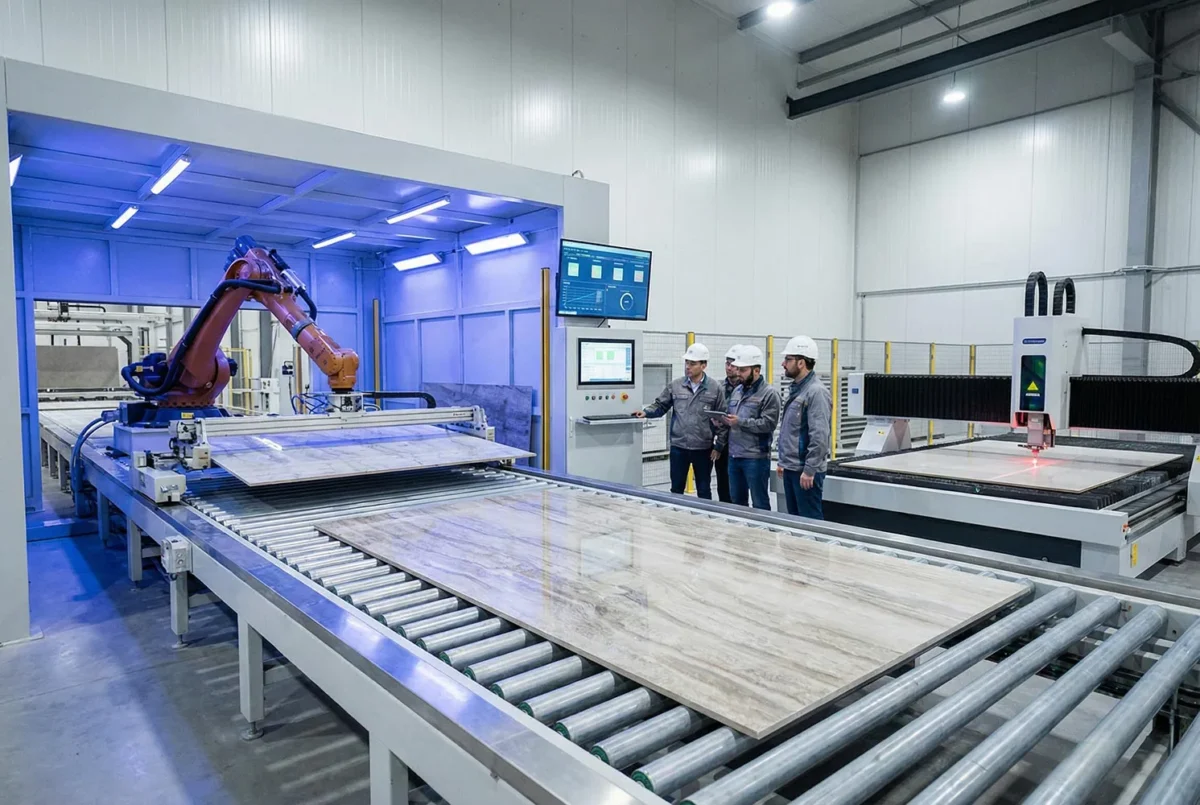
Ceramic tile production has come a long way from the hand-making of clay tiles to the high-tech production of giant porcelain stoneware slabs. Modern technologies make it possible to create materials that seemed like science fiction 20 years ago: tile only 3 mm thick yet stronger than granite; tile of 160×320 cm without a single defect; tile that imitates marble, wood or even fabric perfectly. Understanding these technologies will help you make an informed choice and assess what you are paying for.
M-STONE follows the latest technologies in tile production and constantly updates its knowledge. We help clients find their way through the variety of modern materials and choose the best solutions for their projects.
The evolution of ceramic tile production
From traditional to modern
Traditional production (before the 1960s)
- Manual forming
- Firing in wood-fired kilns
- Limited sizes
- Unstable quality
The industrial revolution (1960s-1980s)
- Conveyor production
- Gas kilns
- Standardised formats
- Mass production
The technological breakthrough (1990s-2000s)
- Porcelain stoneware
- Digital printing
- Rectification
- Formats up to 60×120 cm
The modern era (2010s to today)
- Large-format slabs (up to 160×320 cm)
- Thin porcelain stoneware (3-6 mm)
- Photorealistic printing
- Full-body technology
- Antibacterial surfaces
Technology of producing porcelain stoneware
Raw materials
The main components
| Component | Share | Function |
|---|---|---|
| Clay (kaolin) | 25-30% | Plasticity, forming |
| Feldspar | 40-50% | Melting, strength |
| Quartz sand | 10-15% | Hardness, structure |
| Pigments | 3-5% | Colour |
| Additives | up to 5% | Special properties |
Requirements for the raw materials
- Purity (no impurities)
- Stable composition
- Fine grinding
- Controlled moisture
Production stages
1. Preparing the body
Wet grinding:
- Mixing the components with water
- Grinding in ball mills (12-24 hours)
- Obtaining a uniform suspension (slip)
- Controlling density and dispersion
Drying:
- Atomisation (spraying in a drying tower)
- Obtaining a granular powder
- Moisture 5-7%
- Uniform granules
2. Pressing
Technology:
- Hydraulic presses (pressure 350-500 kg/cm²)
- For large formats, special presses
- Even distribution of pressure
- Forming a dense structure
For large-format tile:
- Higher-power presses
- An increased pressing area
- Precise control of thickness
- Continua+ technology (continuous pressing)
3. Drying
Parameters:
- Temperature 150-200°C
- Time 30-60 minutes
- Residual moisture below 0.5%
- Even drying of the whole area
4. Decorating
Traditional methods:
- Dry application (sprinkling)
- Wet application (pouring)
- Screen printing (stencil printing)
Modern digital printing:
- Inkjet technology
- A photorealistic image
- Millions of design variations
- More detail in the next section
5. Firing
Parameters:
- Temperature 1200-1300°C
- Time 40-90 minutes
- Tunnel or roller kilns
- A controlled temperature profile
What happens during firing:
- Sintering of particles
- Formation of a glassy phase
- Closing of pores
- Gaining strength and hardness
6. Finishing
Rectification:
- Trimming the edges to an exact size
- With diamond blades
- A deviation of less than 0.5 mm
Polishing (if required):
- Abrasive treatment
- Achieving a mirror shine
- Or lappato (semi-polishing)
7. Sorting and quality control
Control parameters:
- Geometry (dimensions, flatness)
- Water absorption
- Strength
- Colour and shade
- Visual defects
Sorting:
- 1st grade (less than 5% defective)
- 2nd grade (5-10% defective)
- 3rd grade (over 10% defective)
- Calibration (grouping by size)
Digital printing: a revolution in decoration
The principle of the technology
Inkjet printing: microscopic droplets of ceramic paints (inks) are applied to the tile surface digitally.
System components
- A print head (piezo or thermal)
- Ceramic inks (metal oxides)
- A tile feed system
- Computer control
The evolution of digital printing
The first generation (2000s)
- 4 colours (CMYK)
- A resolution of 180 dpi
- Basic patterns
The second generation (2010s)
- 6-8 colours
- A resolution of 360-400 dpi
- Realistic imitations
The third generation (2015 to today)
- Up to 16+ colours
- A resolution of 600+ dpi
- Photorealism
- Synchronisation with relief
The fourth generation (today)
- Full HD printing
- Metallised and special-effect inks
- Printing on relief
- An individual design for each tile
Advantages of digital printing
Realism
- Reproduction of the finest details of stone
- Natural colour transitions
- Imitation of texture
Variability
- Tens or hundreds of different ‘faces’ in one collection
- A minimum of repeats
- The effect of a natural material
Production flexibility
- Quick design changes
- Small batches
- Customisation
Economical
- Reduced costs for stencils
- Less waste
- Quick set-up
Synchronising the print and the relief
Digital Surface technology
The tile surface has a relief that exactly matches the printed pattern.
How it works:
- A 3D model of the stone/wood surface is created
- A corresponding relief is formed on the tile
- The print is applied exactly onto the relief
- A visual + tactile effect
The result:
- Marble veins are recessed
- Wood knots are raised
- Absolute realism
Large-format technology
Production challenges
Technical problems
- Even pressing of a large area
- Transport in the kiln without deformation
- Even firing
- Controlling geometry
Continua+ technology (Sacmi)
The principle: continuous forming of a ceramic ribbon instead of pressing individual slabs.
The process
- The powder is fed onto a conveyor belt
- Compaction by rollers (instead of a press)
- Forming a continuous ‘ribbon’
- Cutting to the required sizes
- Decorating
- Firing
Advantages
- Unlimited slab length
- Lower internal stresses
- More stable geometry
- The possibility of producing slabs of 160×320 cm and more
Lamina technology (System)
An alternative technology for thin porcelain stoneware.
Features
- Thickness 3-6 mm
- High bending strength
- Light weight
- The possibility of bending (limited)
Thin porcelain stoneware: a revolution in thickness
What thin porcelain stoneware is
Characteristics
- A thickness of 3-6 mm (instead of the standard 9-12 mm)
- The same or better mechanical properties
- Much lower weight
Comparing weight
| Thickness | Weight of 1 m² | A 120×240 cm slab |
|---|---|---|
| 3 mm | 7-8 kg | ~20 kg |
| 6 mm | 14-15 kg | ~40 kg |
| 10 mm | 23-25 kg | ~70 kg |
| 12 mm | 28-30 kg | ~85 kg |
Production technology
Features
- Special raw material (finer grinding)
- Modified pressing
- Increased density
- Reinforcement (for some kinds)
Popular brands
- Laminam (Italy)
- Kerlite (Cotto d’Este)
- Slimtech (Lea)
- Maximum (Fiandre)
- Techlam (Levantina)
Uses of thin porcelain stoneware
Walls
- Easy installation
- Less load on the structure
- The possibility of installing over existing tile
Furniture
- Kitchen fronts
- Countertops
- Doors
- Wardrobe floors
Building facades
- Ventilated facades
- Light weight
- Large formats
Floors
- Over an existing surface
- A minimal rise in level
Limitations
- A higher price
- Harder to cut
- More sensitive to impact
- Not for zones with impact loads
Full-body porcelain stoneware
What it means
Traditional glazed porcelain stoneware
- A base of one colour
- A decorative layer on top (1-2 mm)
- The difference is visible at a chip
Full-body porcelain stoneware
- The pattern runs through the WHOLE thickness
- A chip is not visible
- Like natural stone
Production technology
Methods
Colouring the body:
- Multicoloured powders
- Mixing before pressing
- A pattern through the whole thickness
Veined technology:
- Applying veins at different levels
- Imitating the depth of marble
- A 3D effect of veining
Advantages of full-body
- Chips are unnoticeable
- The possibility of grinding (restoration)
- Greater realism
- Premium quality
Disadvantages
- A higher cost
- More complex production
- A limited choice of designs
Functional coatings
Antibacterial tile
Technology
- Silver ions in the surface
- Or titanium dioxide (photocatalysis)
- Killing bacteria by up to 99.9%
How it works
- On contact with bacteria, silver ions destroy their cell structure
- Under the action of light, titanium dioxide breaks down organic matter
Application
- Hospitals
- Food production
- Children’s establishments
- Bathrooms
Popular technologies
- Microban® (silver ions)
- Livingstyle Antibacterial (Ceramica Castelvetro)
- Hydrotect® (TOTO): photocatalysis
Anti-slip coatings
Methods of achieving slip resistance
Mechanical:
- A relief surface
- Notches
- Structuring
Chemical:
- Special coatings
- Microporosity
Classification
- R9-R13 (dry conditions)
- A, B, C (wet bare feet)
Self-cleaning surfaces
Technology
- A hydrophilic coating
- Water spreads in a film, washing the dirt away
- Or hydrophobic: droplets roll off together with the dirt
Application
- Building facades
- Floors in public places
- Pools
Antistatic coatings
Purpose
- Draining static electricity
- Protection of electronic equipment
Application
- Server rooms
- Operating theatres
- Electronics production
- Laboratories
Innovative formats and shapes
Non-standard formats
Hexagons
- A decorative effect
- Different sizes
- Combining colours
Chevrons and parquet shapes
- Imitation of parquet
- Ready-made shapes for herringbone laying
- No need for trimming
Curved shapes
- CNC cutting
- Individual projects
- Mosaic compositions
Variable thickness
Tile of variable thickness
- A thinner edge for overlap
- Or a thicker centre for strength
- Special use
Flexible ceramic tile
Technology
- Ultra-thin ceramics (1-3 mm) on a flexible base
- The possibility of wrapping around surfaces
- For columns, furniture, non-standard shapes
Environmental innovations
Recycled raw material
Use of secondary materials
- Recycling of production rejects (up to 40%)
- Recycled glass
- Industrial waste
Certifications
- LEED
- Green Building
- Ecolabel
Energy-efficient production
Directions
- Heat recovery from kilns
- Solar energy
- Optimising firing
- Reducing CO₂ emissions
Durability as eco-friendliness
Porcelain stoneware is one of the most durable materials:
- Service life of 50+ years
- Does not need replacing
- Fewer resources in the long run
How to choose technologically advanced tile
What to pay attention to
The manufacturer
- Well-known Italian and Spanish brands
- Their own R&D centres
- Investment in technology
Technical characteristics
- Water absorption below 0.05%
- Bending strength over 45 MPa
- Surface hardness 7+ on the Mohs scale
Certifications
- ISO 13006 / EN 14411
- Greenguard (low emissions)
- LEED contribution
Technologies
- The latest generation of digital printing
- Synchronised relief
- Full-body (for premium)
Technology leaders
Italy
- Fiandre / Iris Ceramica Group
- Laminam
- Florim / Magnum
- Emilgroup
- Marazzi
Spain
- Porcelanosa
- Venis
- ITT Ceramic
- Apavisa
Contact information
M-STONE: we know all about modern tile technologies
📞 Phones: +38 068 100 27 96, +38 050 914 18 99 📧 Email: [email protected] 🌐 Website: https://mstone.ua/
Social media
- Instagram: https://www.instagram.com/mstone_kiev/
- Facebook: https://www.facebook.com/mstone.kyiv/
- YouTube: https://www.youtube.com/@M-Stone_Kyiv/
Geography of work
Kyiv: all districts Kyiv region: Brovary, Irpin, Bucha, Vyshhorod, Vyshneve, Boiarka, Kozyn, Koncha-Zaspa and others All of Ukraine: travel to projects
M-STONE’s advantages
✅ Knowledge of technologies: we will help you choose the best solution ✅ Work with innovative materials: thin porcelain stoneware, large formats ✅ Installation experience: we know the features of each type of tile ✅ Consultations: we will explain the difference between technologies ✅ Access to new products: cooperation with leading suppliers
The current cost of work for your project can be calculated in the online calculators or confirmed by the manager: it depends on the material, the slab format and the condition of the substrate. The consultation is free.

About M-STONE
This material was prepared by the M-STONE team: 20 years of brand history, installation of large-format tile and natural stone in Kyiv and across Ukraine. The company is led by Oleg Dolynskyi. The recommendations describe the typical order of work; a specialist refines the solution for your project after a consultation.
Contact us
We will price your project
Send the dimensions and slab format: we will calculate the material and installation and suggest the timing.