Large-Format Tile for a Hallway and Corridor: Practicality and Style from the First Steps
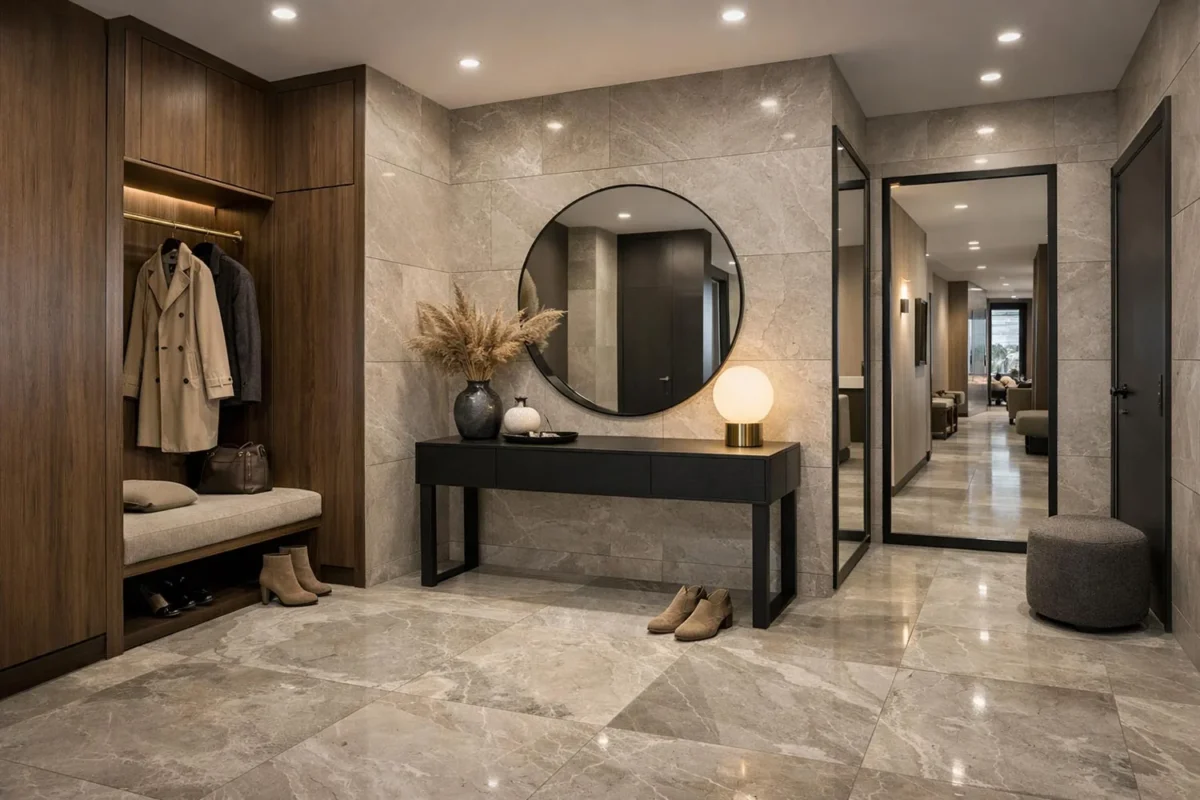
The hallway is the calling card of your home
The hallway and corridor are the first thing your guests see and the last thing you see when leaving home. These spaces form the first impression of the whole interior but at the same time bear the heaviest load: dirt from the street, moisture from shoes, sand and de-icing agents in winter, constant movement. That is why the choice of flooring for these zones needs a special approach: you need a material that combines a flawless look with maximum practicality.
M-STONE understands the specifics of cladding hallways and corridors. We help clients choose materials that will withstand intensive use and keep a presentable look for years.
Features of using a hallway and corridor
Load on the floor
Mechanical impacts
- Constant movement (the heaviest traffic in the house)
- Heels (point load)
- Suitcases and bags on wheels
- Prams and bicycles
- Moving furniture
Contamination
- Dust and sand from the street
- Dirt in rainy weather
- Salt and de-icing agents in winter
- Water from wet shoes
- Melting snow
Chemical impacts
- Floor cleaning products
- Salt and chemical agents
- Residues of shoe-care products
Requirements for the flooring
Wear resistance
- Class PEI IV-V (maximum)
- Resistance to abrasive wear
- Surface hardness 7+ on the Mohs scale
Moisture resistance
- Water absorption below 0.5%
- Resistance to constant moisture
- Quick drying of the surface
Slip resistance
- Class R10-R11 for safety
- A structured or matt surface
- Take into account that the floor will be wet
Ease of care
- Resistance to household chemicals
- A non-porous surface
- The possibility of frequent washing
Aesthetics
- A presentable look
- Harmony with the rest of the interior
- Practical colours (not too light)
Why large-format tile is ideal for a hallway
Advantages of large format
A minimum of joints
- Fewer places for dirt to accumulate
- Easier to wash
- Visually enlarges the space
A monolithic look
- Solidity and elegance
- A modern design
- A luxury effect
Durability
- Withstands decades of intensive use
- Does not lose its look
- Does not need replacing
Comparison with other coverings
| Material | Wear resistance | Moisture resistance | Care | Look |
|---|---|---|---|---|
| Porcelain stoneware | Excellent | Excellent | Easy | Excellent |
| Laminate | Good | Poor | Average | Good |
| Parquet | Average | Poor | Difficult | Excellent |
| Linoleum | Average | Good | Easy | Average |
| Carpet | Poor | Poor | Difficult | Average |
Conclusion: Porcelain stoneware is the optimal choice for a hallway on all parameters.
Optimal tile formats for a hallway
Recommendations by room size
A small hallway (up to 4 m²)
- 60×60 cm: a classic choice
- 60×120 cm: visually lengthens the space
- Avoid formats that are too large (many offcuts)
A medium hallway (4-8 m²)
- 60×120 cm: ideal
- 80×80 cm: a square format
- 120×120 cm: if the geometry allows
A large hallway (more than 8 m²)
- 120×120 cm: monolithic
- 120×240 cm: a minimum of joints
- The possibility of combining formats
A long corridor
The problem: the corridor looks even narrower.
The solution
- Laying across (visually widens)
- Or diagonal laying
- Format 60×120 cm, 30×120 cm (elongated)
Tile format
- 30×120 cm: imitates planks, looks good lengthwise
- 60×120 cm: a classic
- Avoid square formats in narrow corridors
Tile designs for a hallway
Imitation of natural stone
Marble
- Light marble (Calacatta, Statuario): luxurious, but an impractical colour
- Grey marble (Pietra Grey): elegant and practical
- Dark marble (Nero Marquina): dramatic, hides dirt
Travertine
- Warm tones
- A natural look
- Medium practicality
Granite
- Maximum practicality
- A variety of colours
- A grainy pattern hides dirt
Imitation of concrete and cement
Advantages for a hallway
- Exceptional practicality
- Dirt is not noticeable
- A modern industrial look
- Neutrality
Options
- Light grey concrete: widens the space
- Medium grey: universal
- Dark grey (anthracite): modern, but can visually reduce the space
Imitation of wood
Advantages
- Warmth and cosiness from the threshold
- The beauty of wood without the drawbacks
- The possibility of continuing into the rooms
Recommendations for a hallway
- Medium and dark tones (more practical)
- A matt or brushed surface (not slippery)
- Horizontal laying along the direction of movement
Limitations
- Light tones get dirty quickly
- A polished surface is slippery
Terrazzo
For a hallway
- Hides dirt excellently
- A unique character
- Retro-modern
- Resistance to wear
Plain tile (monochrome)
Practical colours
- Grey (all shades): the most practical
- Beige, taupe: warm and practical
- Anthracite: modern, practical
Impractical colours
- White: gets dirty instantly
- Black gloss: every speck of dust is visible
- Very light tones
Technical characteristics of tile for a hallway
Mandatory parameters
Wear resistance
- Class PEI IV: minimum
- Class PEI V: ideal
Water absorption
- Below 0.5%: mandatory
- Below 0.1%: ideal
Slip resistance
- R10: minimum
- R11: recommended
- A matt or structured surface
Strength
- Bending: minimum 35 MPa
- Recommended: 45+ MPa
What to avoid
- PEI I-III (for walls or low-traffic zones)
- A polished surface (slippery, scratches show)
- Very thin tile (less than 8 mm)
- Tile with high water absorption
Methods of laying
Classic straight laying
Description: tiles parallel to the walls, with or without an offset.
Advantages
- Simplicity
- A minimum of waste
- A classic look
For a hallway
- A 1/3 offset is the most popular option
- Creates dynamics without complexity
Diagonal laying
Description: tiles at a 45° angle to the walls.
Advantages
- Visually enlarges the space
- An interesting visual effect
- Hides uneven walls
Disadvantages
- More waste (15-20%)
- More complex installation
- More expensive
For a hallway: especially recommended for narrow and non-standard rooms.
Herringbone laying (for wood-look tile)
Description: tiles at an angle to one another, like parquet.
Advantages
- A parquet effect
- Classic elegance
- A unique look
Disadvantages
- A lot of waste (up to 25%)
- Complex installation
- More expensive
Combining materials
The idea: different materials for different zones of the hallway.
Examples
- The entrance zone (by the door): practical dark tile
- The rest of the hallway: lighter tile or another material
The transition
- A straight joint (no profile)
- A decorative profile
- A smooth transition made of mosaic
Zoning a hallway with tile
Functional zones
The zone by the front door
- Maximum load
- The most dirt
- Recommendation: structured tile in dark tones
The shoe-changing zone
- Wet shoes
- A bench or pouffe
- Recommendation: an anti-slip surface
The storage zone
- A wardrobe, a coat rack
- Less load
- Recommendation: a lighter tone is possible
The transition zone into the rooms
- A decorative function
- A visual transition
- Recommendation: harmony with the floor of the rooms
Highlighting zones
Colour
- Different shades of one material
- Or contrasting materials
Layout
- A different direction of laying
- A different format
A decorative transition
- A border
- A mosaic insert
- A metal profile
Combining with other rooms
A hallway + living room (open plan)
Option 1: a single surface
- One material across the whole area
- Visual unity
- Simplicity
Option 2: zoning
- Tile in the hallway
- Another material in the living room
- A clear separation of functions
The transition
- On one level (ideal)
- With a threshold (less desirable)
A hallway + corridor
Recommendation: a single material for visual integrity.
A hallway and stairs
If the stairs are nearby
- The same or a similar material is desirable
- Matching colour and style
- Pay attention to slip resistance on the stairs
Practical tips from M-STONE
Taking lighting into account
Natural light
- If there is a window, there is more freedom in choosing colour
- If there is none, avoid very dark tones
Artificial light
- Warm light: warm tile tones
- Cool light: neutral and cool tones
- Enough light (a hallway is often dark)
Choosing the grout colour
For a hallway
- Grout in the tone of the tile or darker
- Avoid white grout (gets dirty quickly)
- Epoxy grout is the best choice
A mat and a cleaning system
Recommendations
- A quality dirt-trapping mat at the entrance
- A shoe-scraper grate (if possible)
- Reduces the load on the tile
Floor heating
Underfloor heating in a hallway
- Comfort when changing shoes
- Quick drying of a wet floor
- Warmth from the first steps
Features
- A flexible adhesive is mandatory
- Expansion joints
Mistakes when cladding a hallway
Mistake 1: tile that is too light
The problem: it gets dirty instantly and constantly needs washing.
The solution: medium and dark tones, or patterns that hide dirt.
Mistake 2: a polished surface
The problem: slippery when wet, every scratch shows.
The solution: a matt, satin or structured surface.
Mistake 3: a low wear-resistance class
The problem: quick abrasion and loss of appearance.
The solution: only PEI IV-V for a hallway.
Mistake 4: saving on materials
The problem: a hallway is not the place to save on quality.
The solution: better a smaller area but a higher-quality material.
Mistake 5: ignoring slip resistance
The problem: the danger of falls, especially in winter.
The solution: slip resistance R10-R11, a structured surface.
Contact information
M-STONE: cladding of hallways and corridors
📞 Phones: +38 068 100 27 96, +38 050 914 18 99 📧 Email: [email protected] 🌐 Website: https://mstone.ua/
Social media
- Instagram: https://www.instagram.com/mstone_kiev/
- Facebook: https://www.facebook.com/mstone.kyiv/
- YouTube: https://www.youtube.com/@M-Stone_Kyiv/
Geography of work
Kyiv: all districts Kyiv region: Brovary, Irpin, Bucha, Vyshhorod, Vyshneve, Boiarka, Kozyn, Koncha-Zaspa and others All of Ukraine: travel to projects
M-STONE’s advantages for a hallway
✅ The right choice of material: practicality + aesthetics ✅ Large formats: a minimum of joints, easy care ✅ Wear-resistant materials: PEI IV-V ✅ Anti-slip surfaces: safety ✅ Zoning: functional design ✅ Harmony: matching the rest of the interior
The current cost of work for your project can be calculated in the online calculators or confirmed by the manager: it depends on the material, the slab format and the condition of the substrate. The consultation is free.

About M-STONE
This material was prepared by the M-STONE team: 20 years of brand history, installation of large-format tile and natural stone in Kyiv and across Ukraine. The company is led by Oleg Dolynskyi. The recommendations describe the typical order of work; a specialist refines the solution for your project after a consultation.
Contact us
We will price your project
Send the dimensions and slab format: we will calculate the material and installation and suggest the timing.